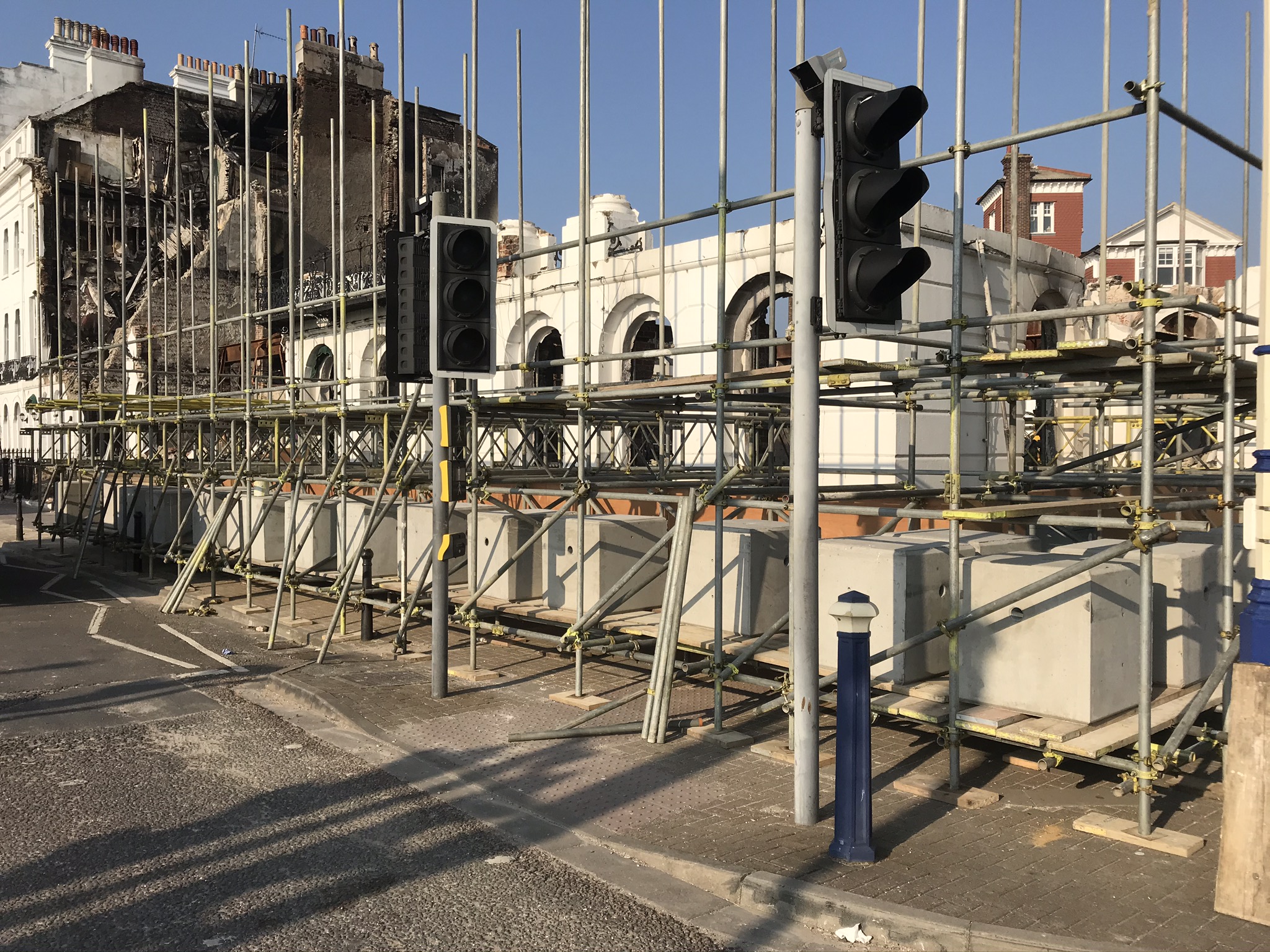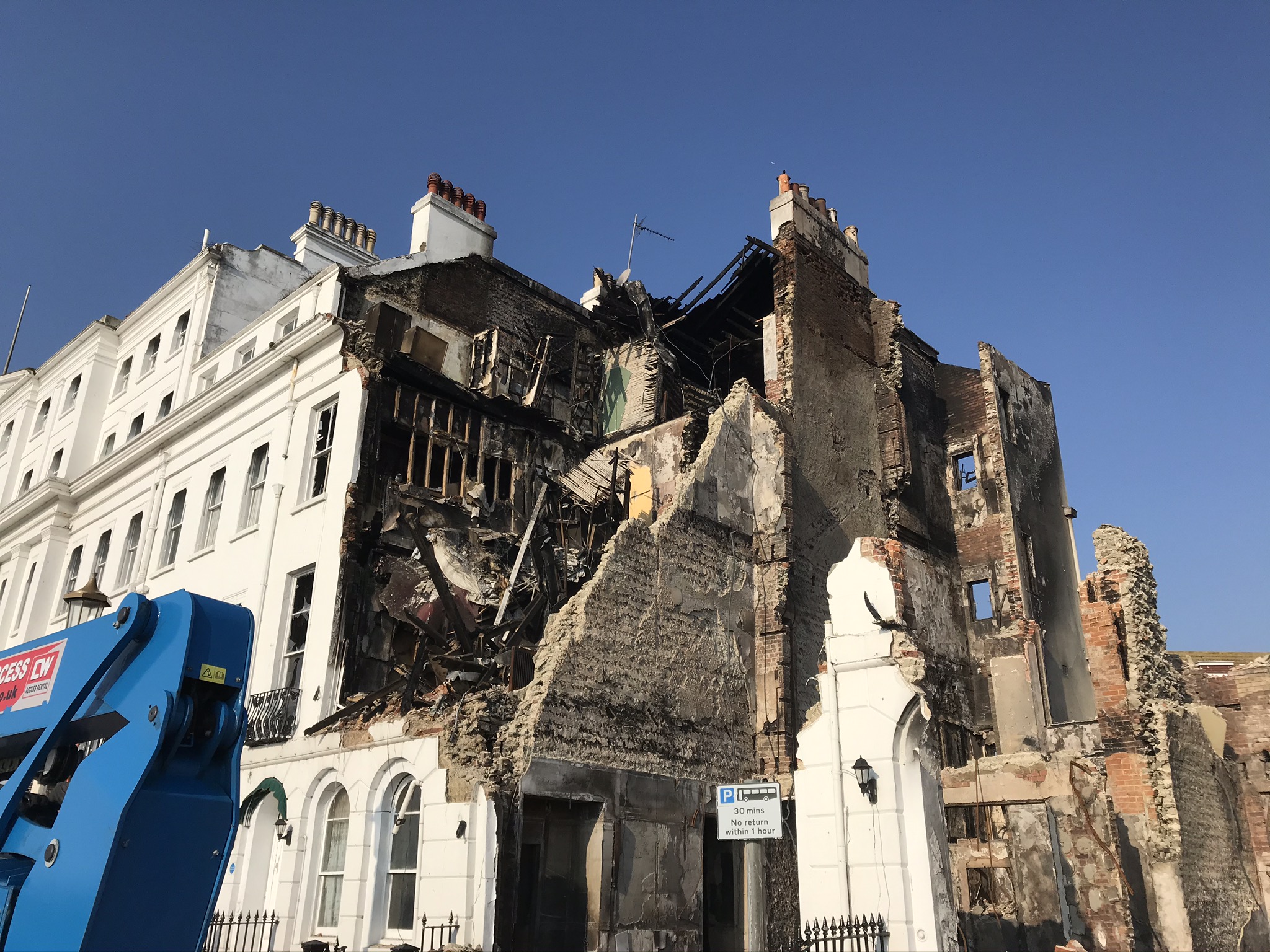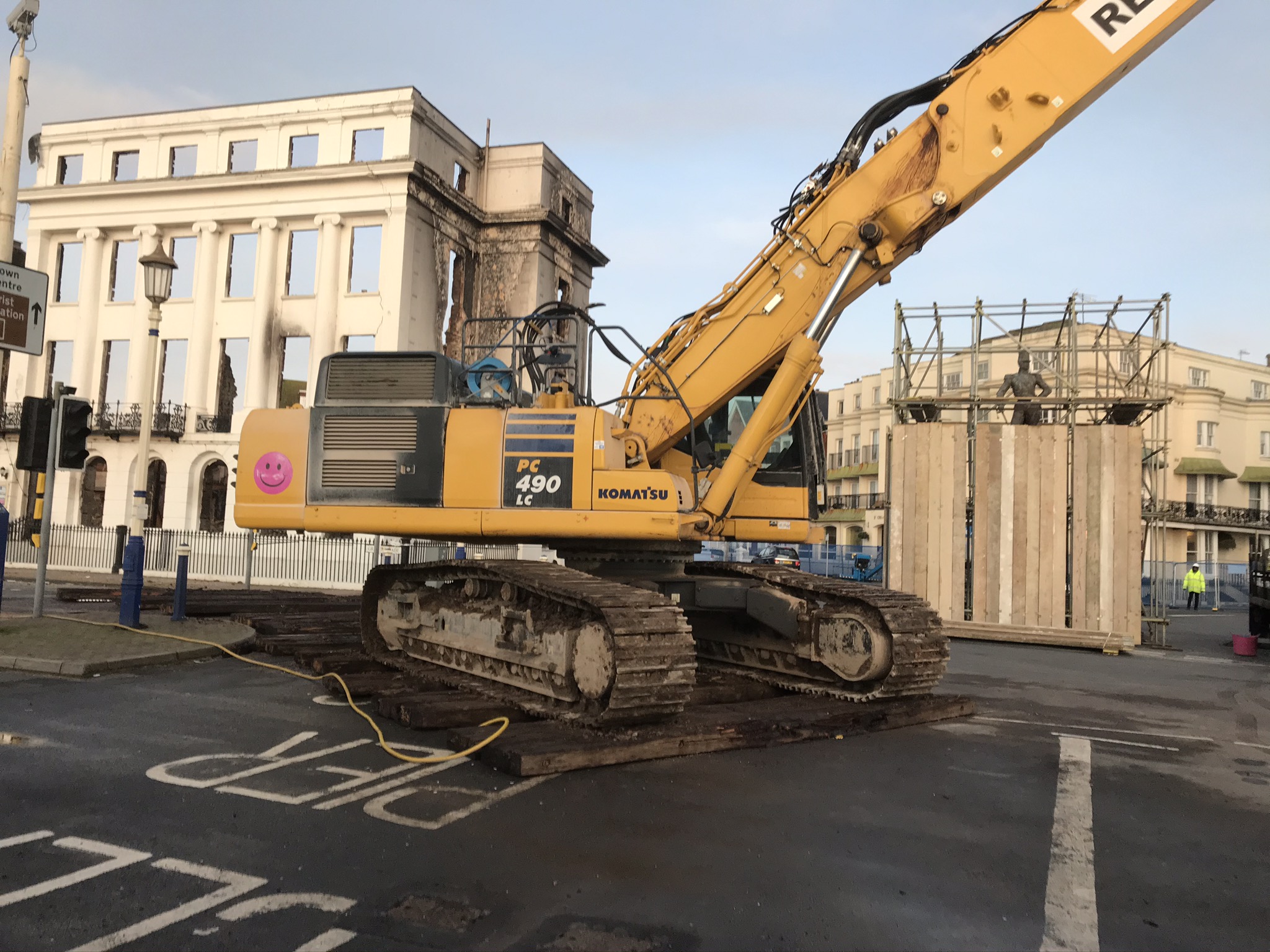
Following a major fire, the Claremont Hotel on Eastbourne’s historic seafront suffered extensive damage and ultimately required complete demolition. As a listed building located within a conservation area, the Claremont held historical and architectural significance to the local community. The fire, which devastated much of the hotel’s rear structure, left parts of the front façade still standing, sparking extensive evaluations by engineers and conservationists to determine the safest way forward. The seven-story hotel, with its 125 rooms, was built from traditional brick, incorporating timber floors and a pitched roof, architectural choices that added character but also created unique challenges in a disaster. Compounding the complexity, the site was designated as asbestos-contaminated, introducing further precautions and requirements for handling hazardous materials. Following the fire, the safety risk to the area prompted emergency closures of nearby streets and a swift evacuation of local residents.
In the wake of the fire, a collaborative approach became essential to ensure both safety and efficiency in the demolition process. Regular progress meetings were held with a range of key stakeholders, including representatives from local councils, highway authorities, local business owners, insurance adjusters, and forensic investigators. Each entity had a vested interest in managing the consequences of the fire—be it public safety, economic impact, or regulatory compliance. This partnership facilitated the development of a phased demolition plan that prioritised restoring access to nearby properties as quickly as possible, minimising disruption to the surrounding area and ensuring the safety of residents and workers.
Before the full demolition could commence, we focused on securing the site for investigation teams, ensuring that the hazards were controlled and contained. This initial stage involved detailed testing and certification to confirm the site’s safety. We conducted selective demolitions at the rear to open safe access points for investigators, enabling them to complete their examinations and collect all required data on the fire’s causes and impact. Only after these investigations were finalised did we proceed with broader demolition efforts, addressing remaining safety and logistical challenges.
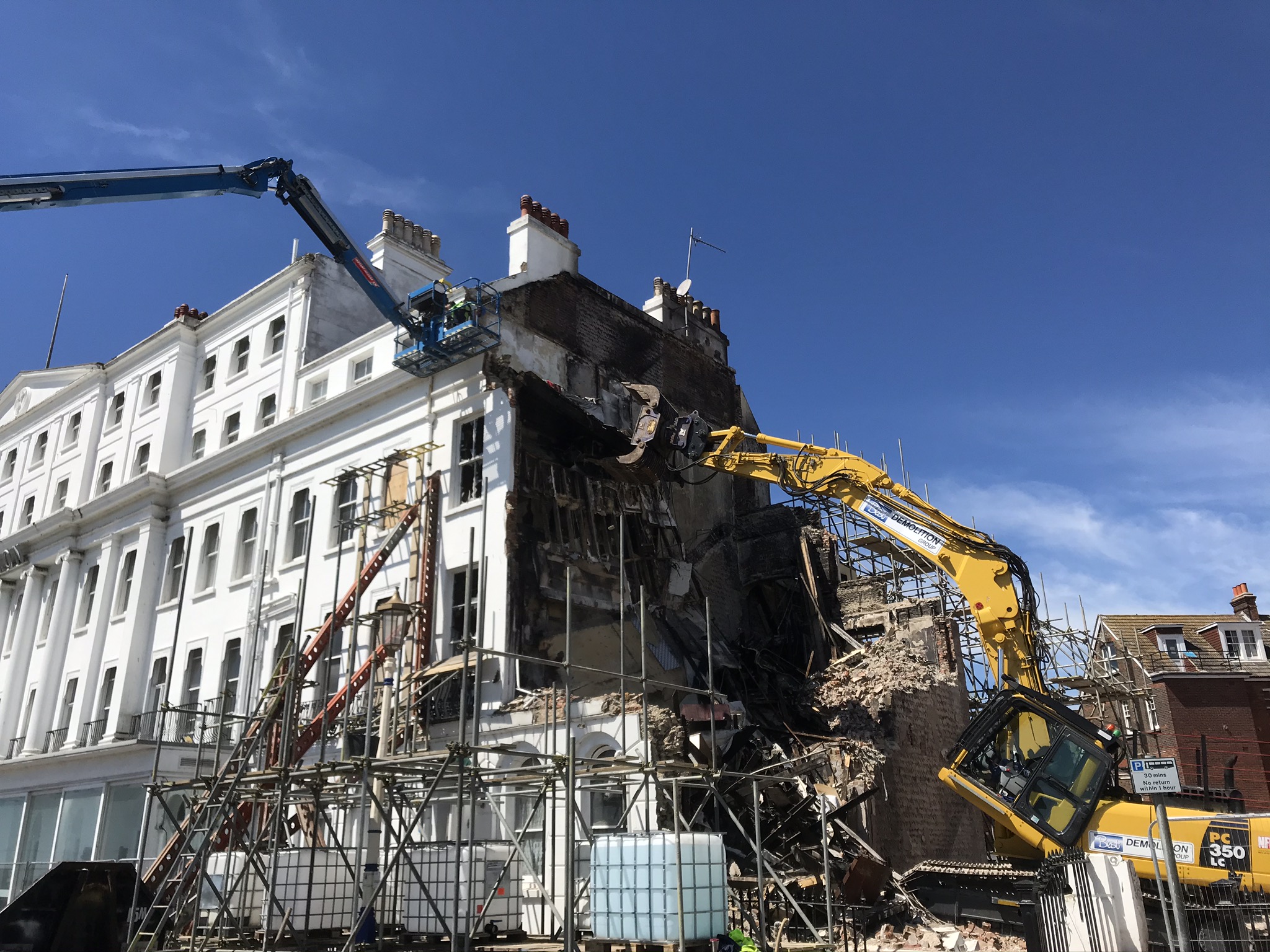
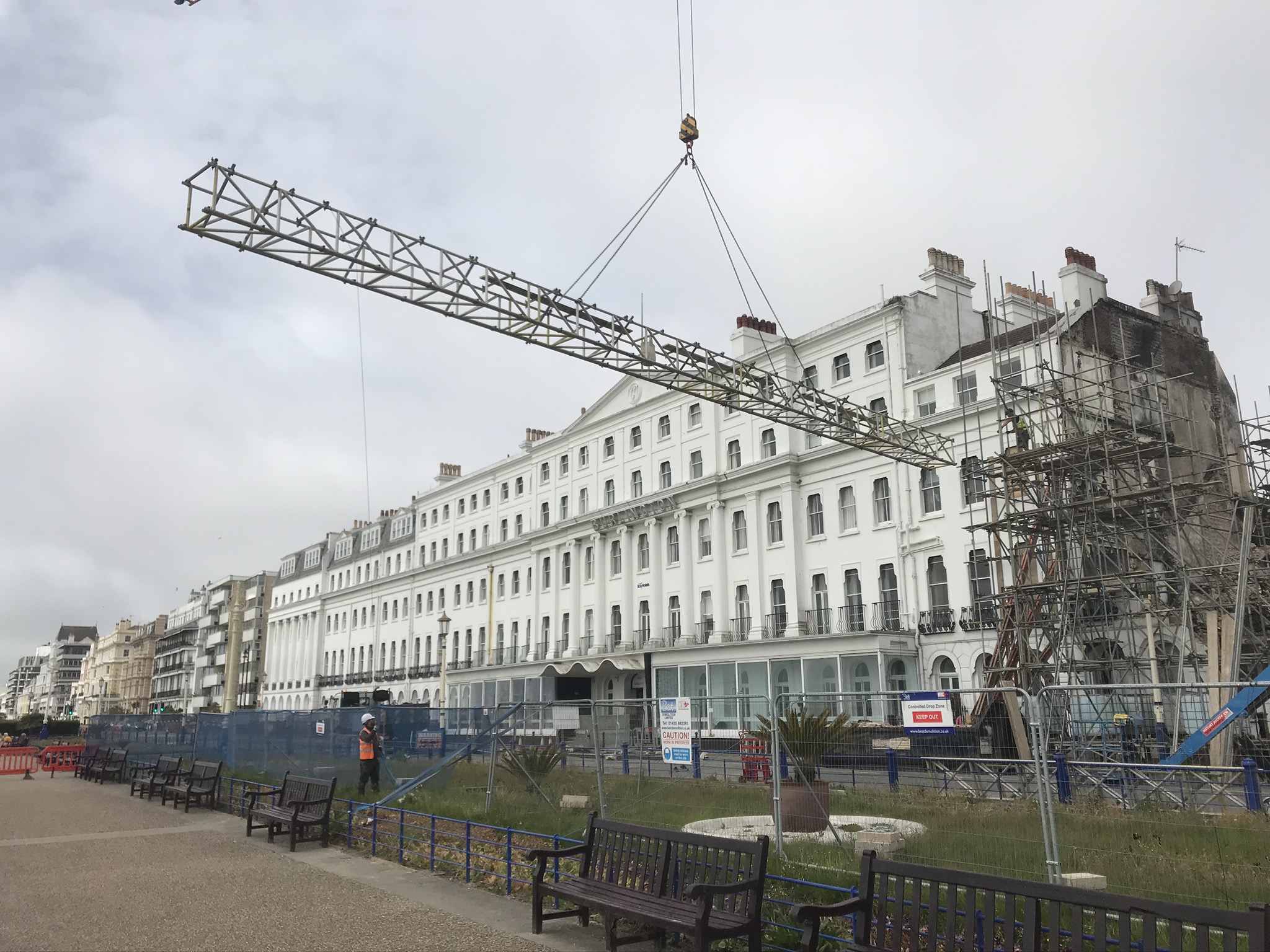
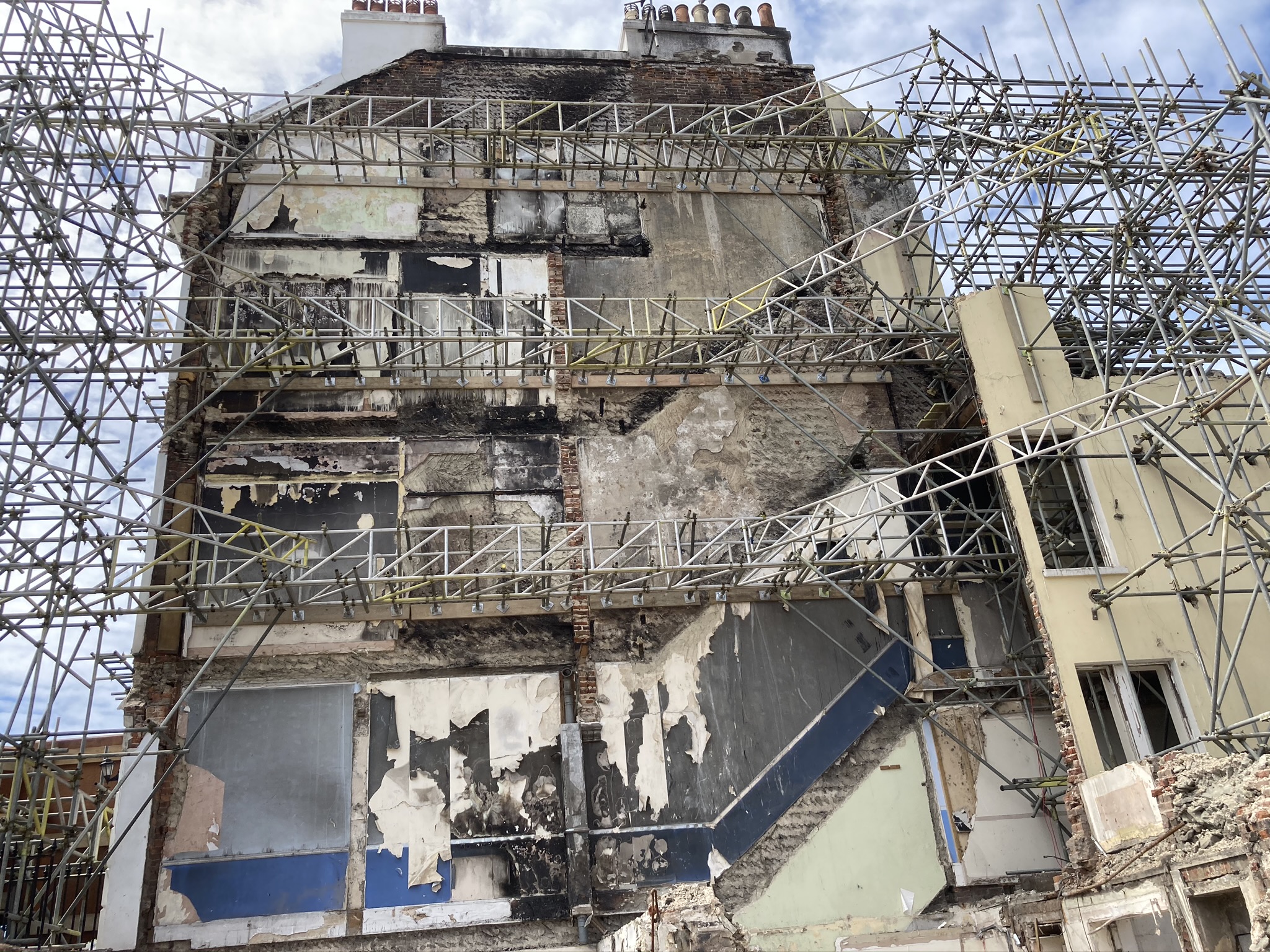
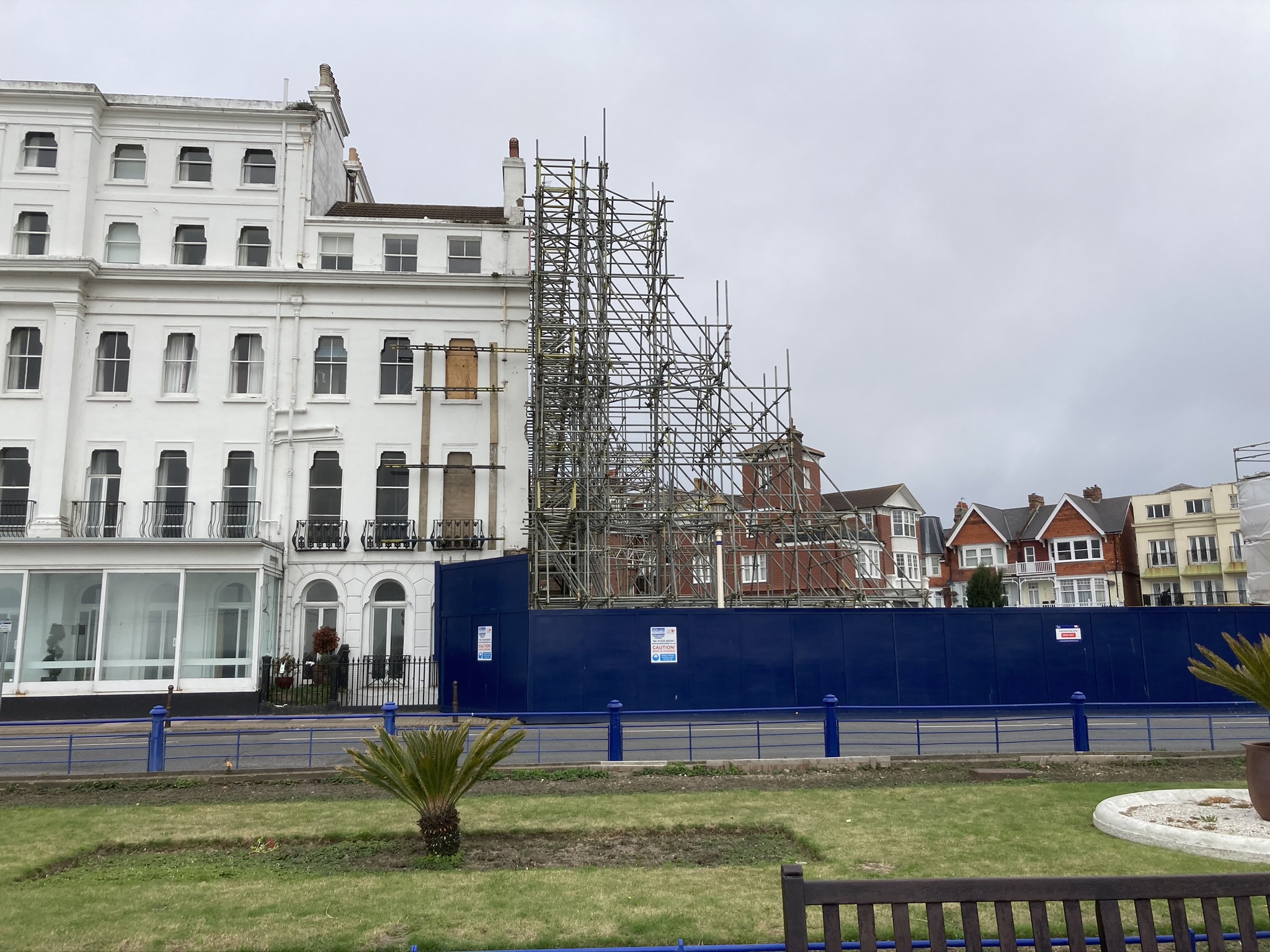
One of the most significant challenges centred on the shared (party) wall between the Claremont Hotel and an adjoining hotel. This wall, which measured 600mm thick and stood at a height of 23 meters, posed a serious structural risk, as it was unsupported on one side and therefore prone to collapse. To stabilize this wall, we devised a comprehensive support strategy that involved removing non-structural elements from parts of the adjoining hotel to reduce load. Back-propping was installed from the basement level to the roof to reinforce the wall internally, while we also added external “raking shores”—angled supports that braced the wall externally. Additionally, we connected the raking shores with “flying shores,” horizontal braces that added stability to the structure. Scaffold tubes linked the internal and external supports, reinforcing the wall further and ensuring it was sufficiently stabilized to prevent any uncontrolled collapse.
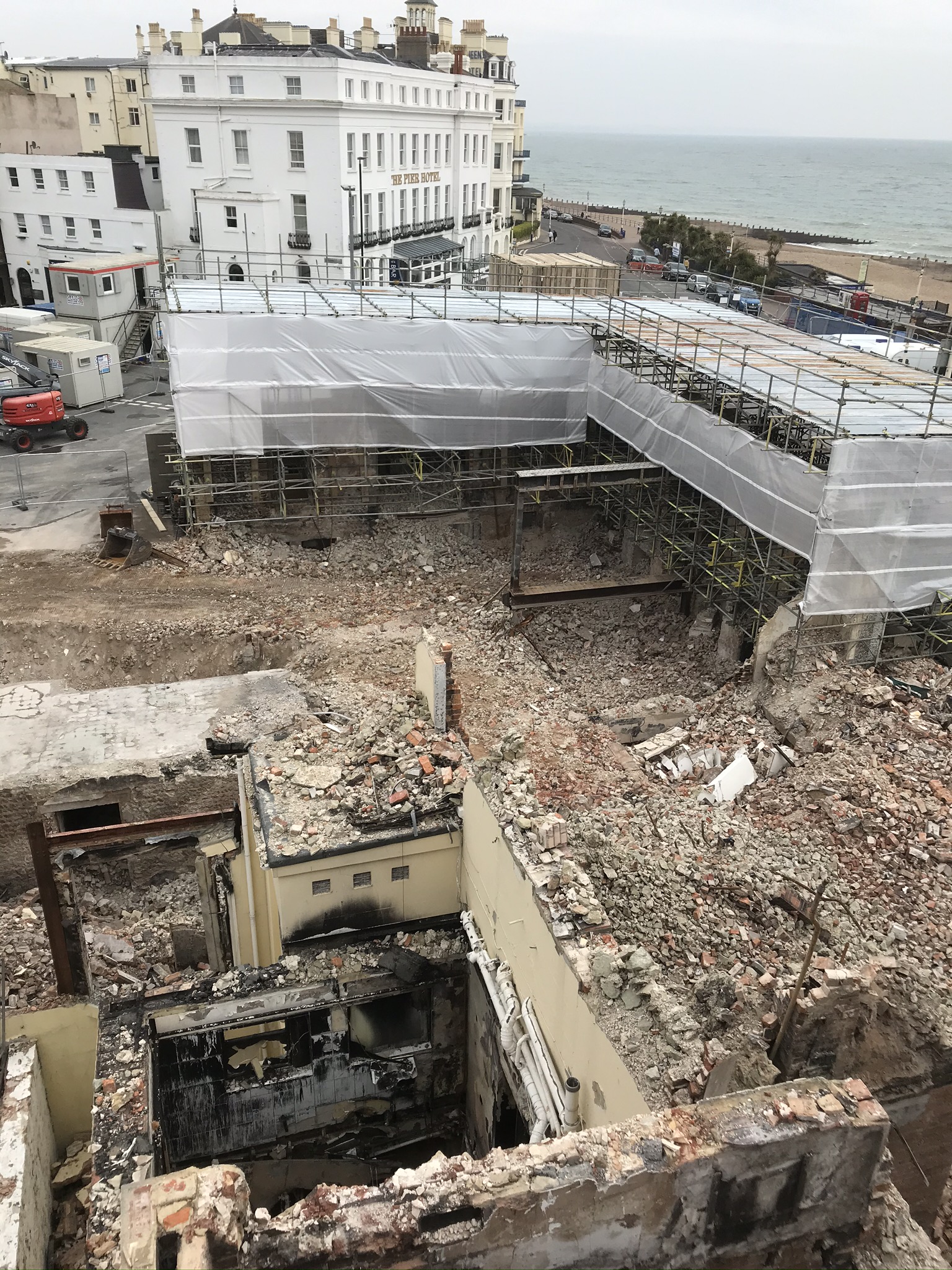
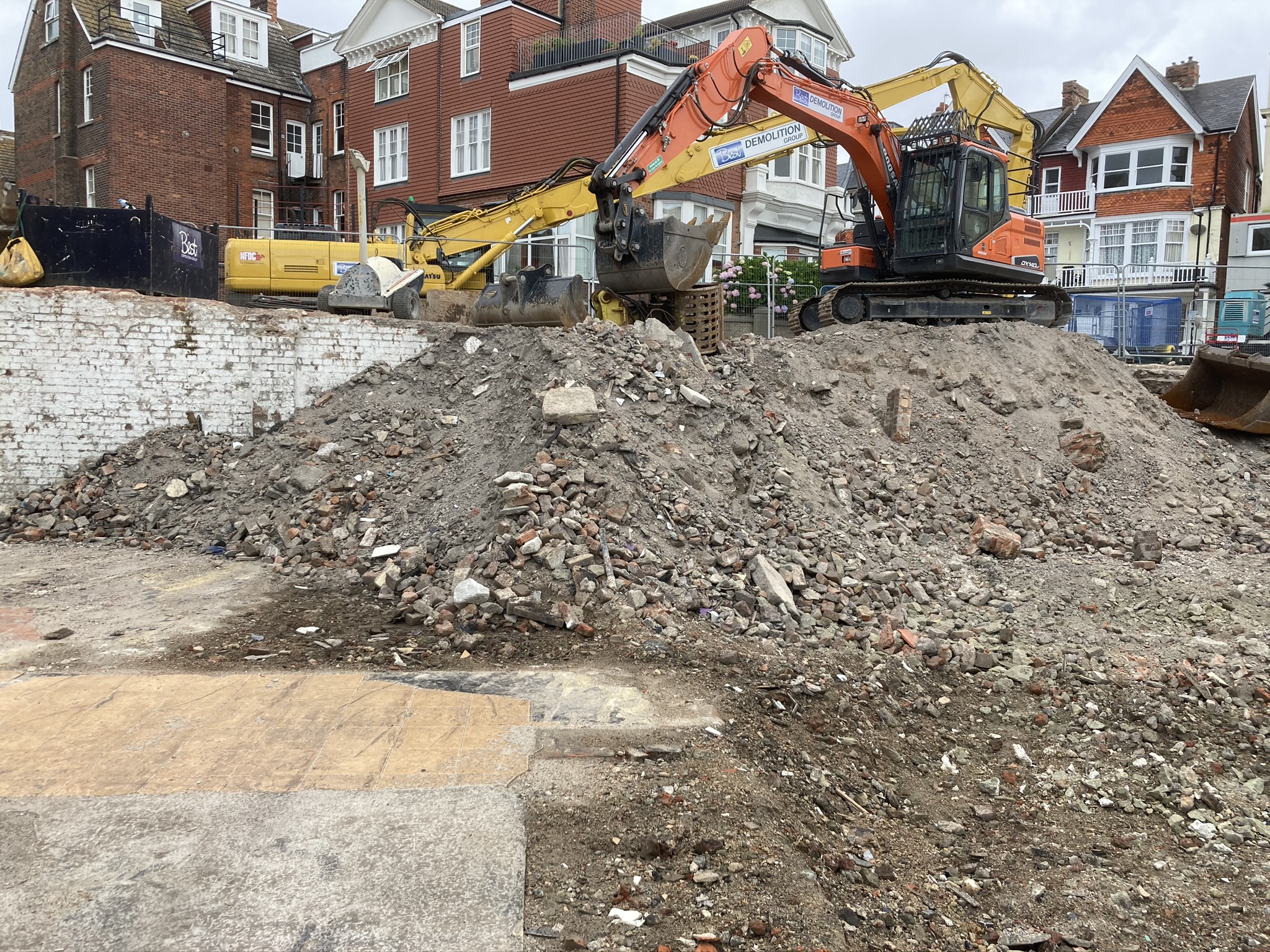
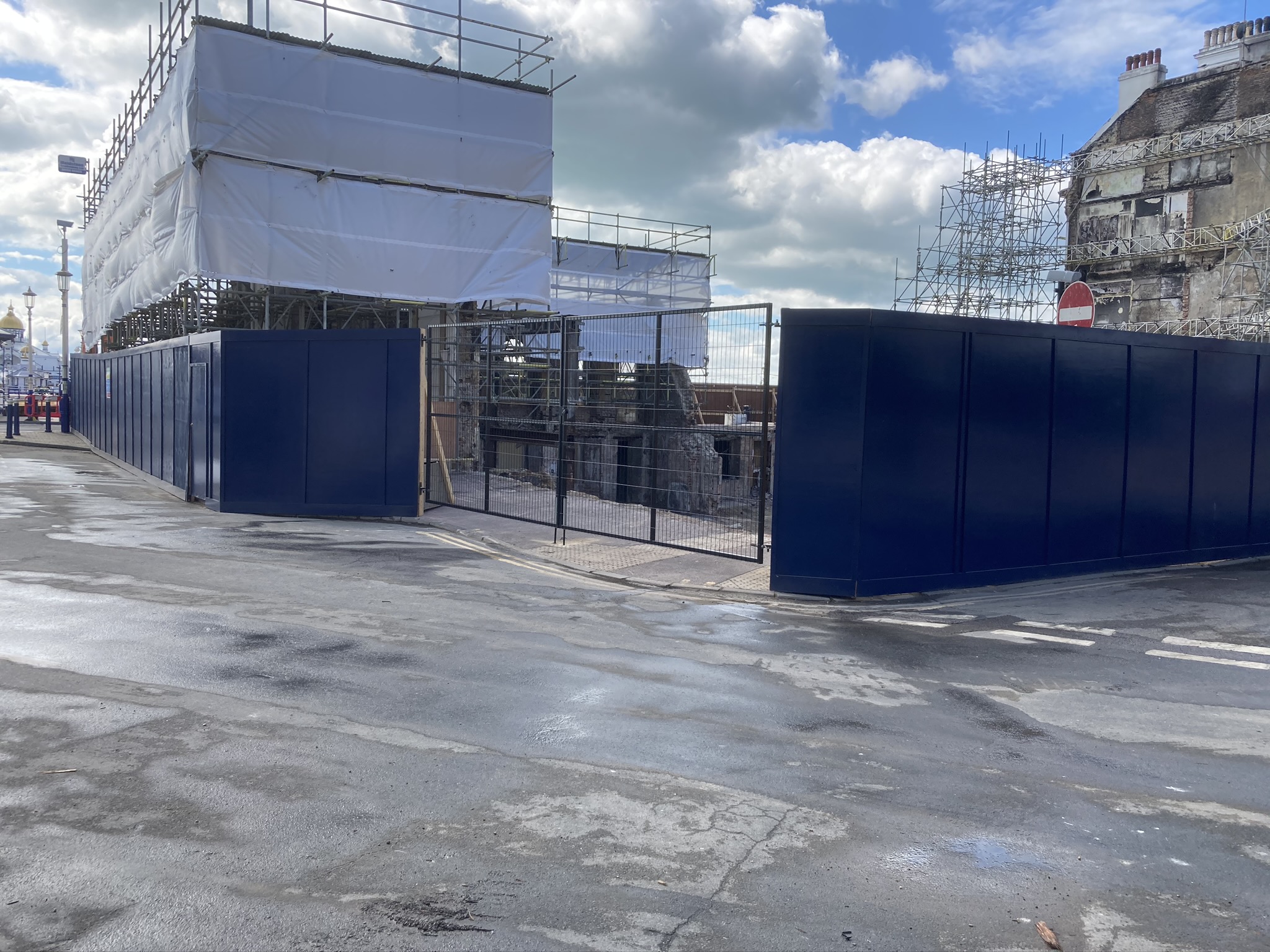
Once we had verified that the stabilisation measures were effective, the team moved forward with the full demolition, preserving the southeast corner of the building’s façade as specified in the project’s requirements. The presence of asbestos posed another challenge, as it required careful handling to prevent contamination and manage hazardous waste safely. Our initial plan involved removing all debris and treating it as hazardous waste due to the asbestos risk. However, by collaborating closely with our project partners, we were able to implement a decontamination process that safely cleaned and tested materials on-site. This allowed much of the debris to be recategorized as non-hazardous waste, enabling safer disposal and resulting in significant cost savings for both the client and the insurer. Each step of this process was independently certified to meet all safety standards, providing accountability and ensuring environmental safety.
Following the completion of the demolition and site clearing, we left essential scaffolding in place to support any remaining structures, meeting all regulatory requirements and maintaining safety for the surrounding area.