
Project Summary: Restoration of the Angel Inn Hotel and Adjacent Buildings
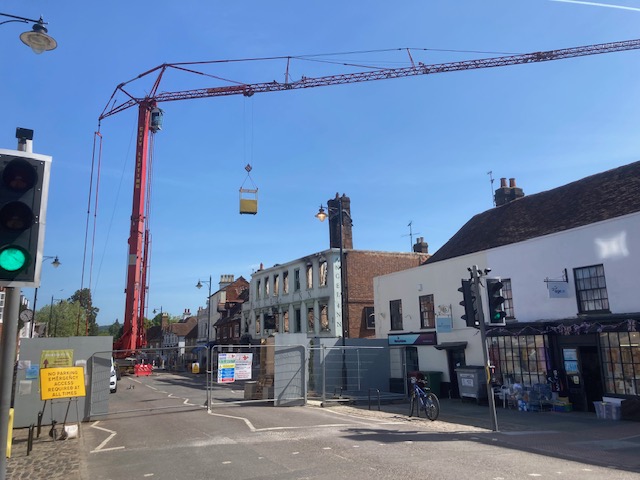
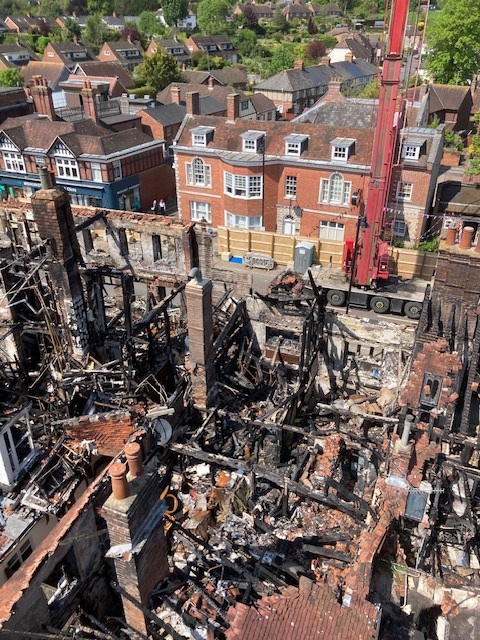
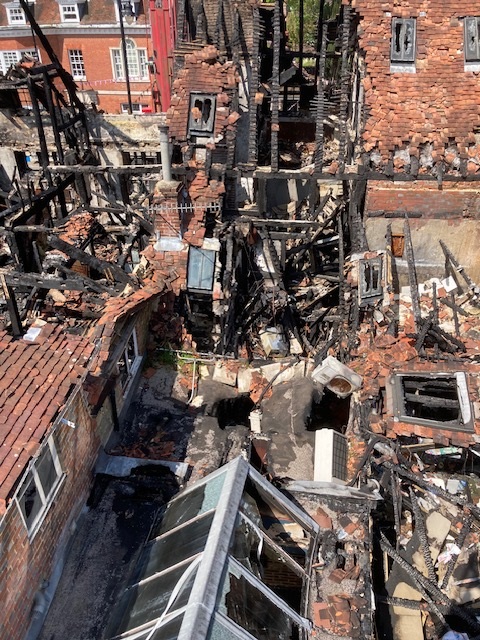
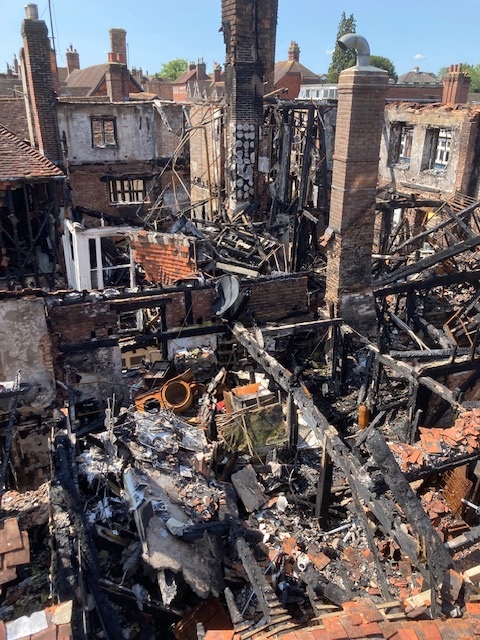
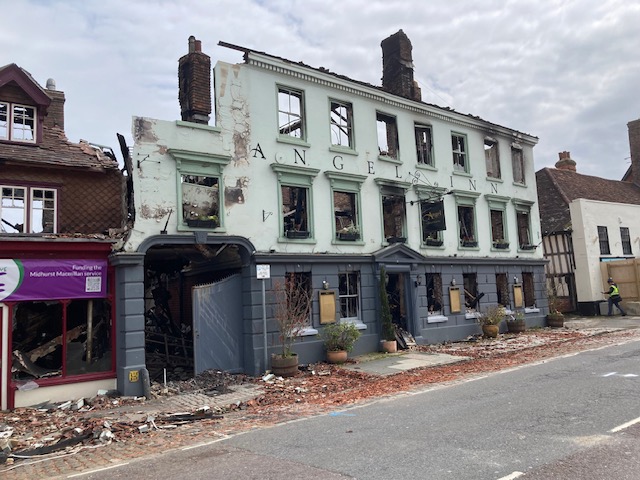
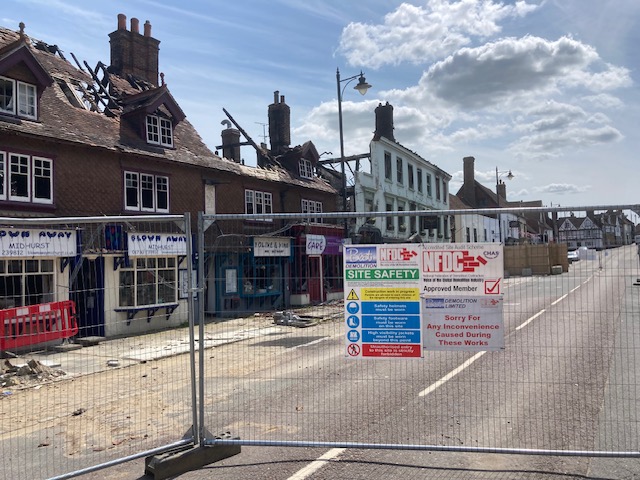
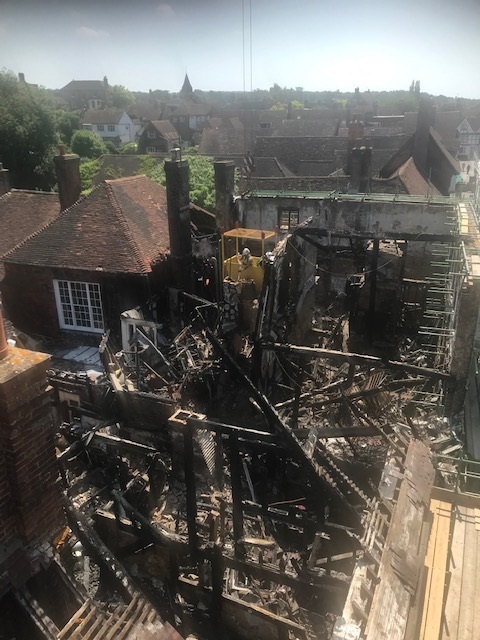
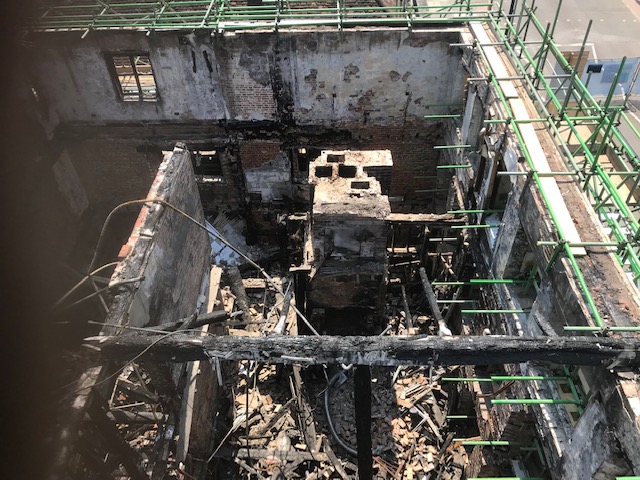
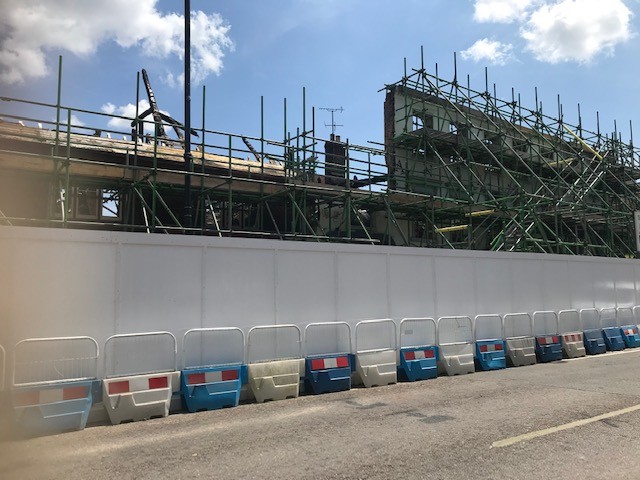
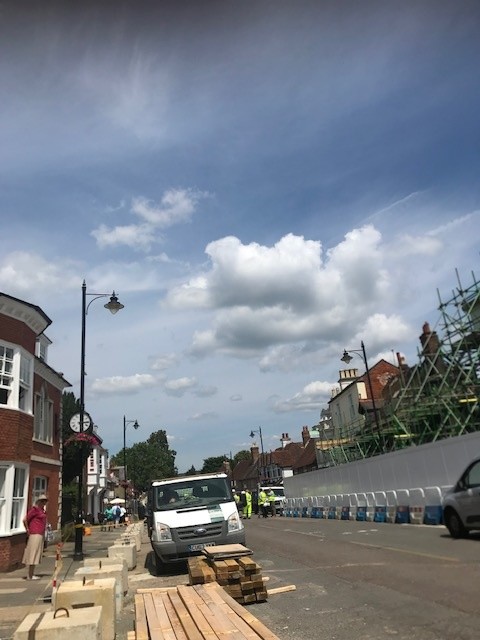
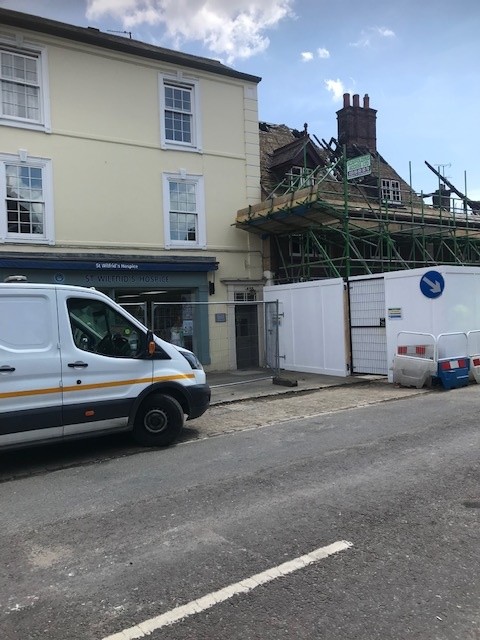
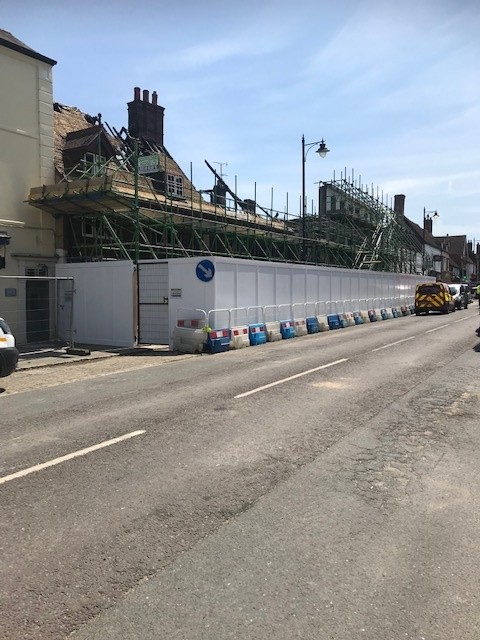
Following a severe fire that destroyed the Angel Inn Hotel and adjacent businesses, significant structural damage to the buildings required urgent action. Due to safety concerns, North Road, the main road through Midhurst, had to be closed, creating a major inconvenience. The closure forced a lengthy 13-mile detour around town, which affected not only residents, but also emergency service response times. In response, the site was immediately secured with hoardings, and nearby homes were evacuated due to concerns of potential collapse.
Key Challenges and Objectives
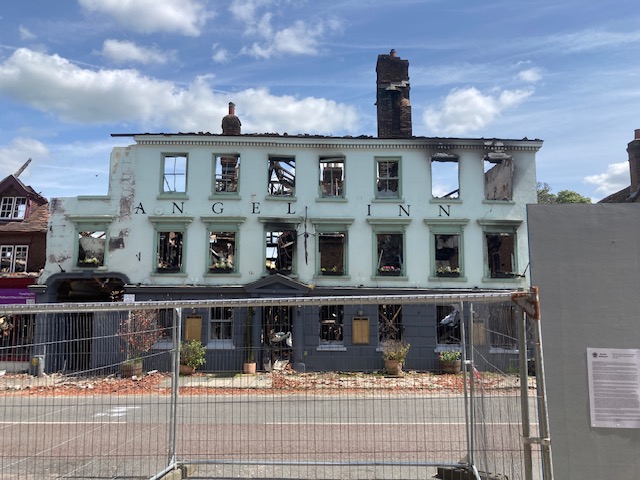
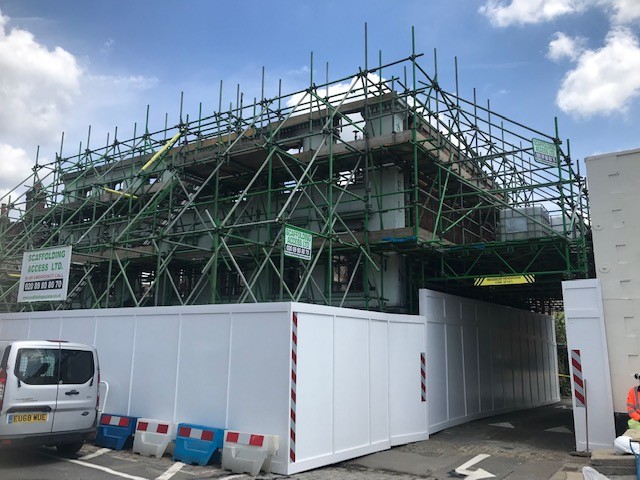
The South Downs National Park Authority assumed control of the site, prioritising public safety. A primary objective was to retain as much of the fire-damaged façade as possible as the buildings were listed for preservation. This required the strategic demolition of unstable, high-level structures while preserving the historical façade.
Approach and Solutions
1. Safety Measures and Monitoring:
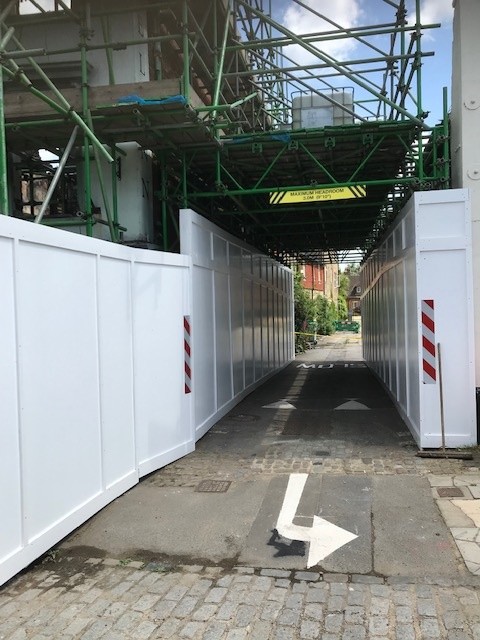
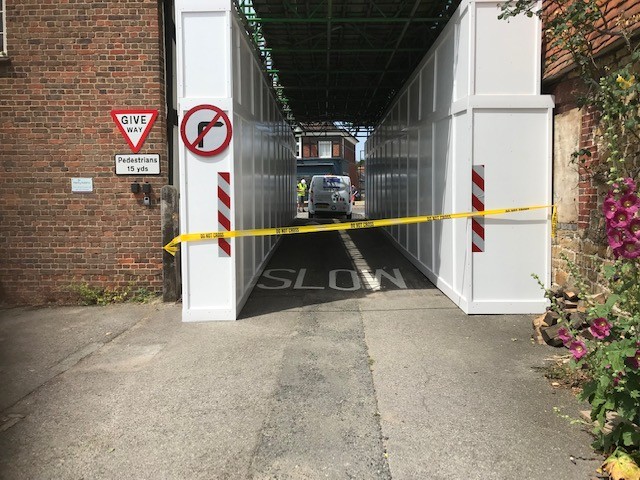
A structural monitoring system was set up to detect any movement during demolition, ensuring safety at every step. The site was carefully hoarded off for public safety, and emergency access routes were established in collaboration with local services, enabling 24-hour site access.
2. Facade Support Engineering:
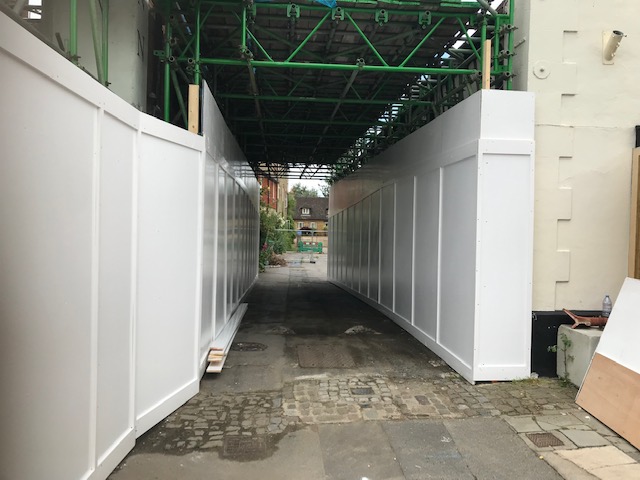
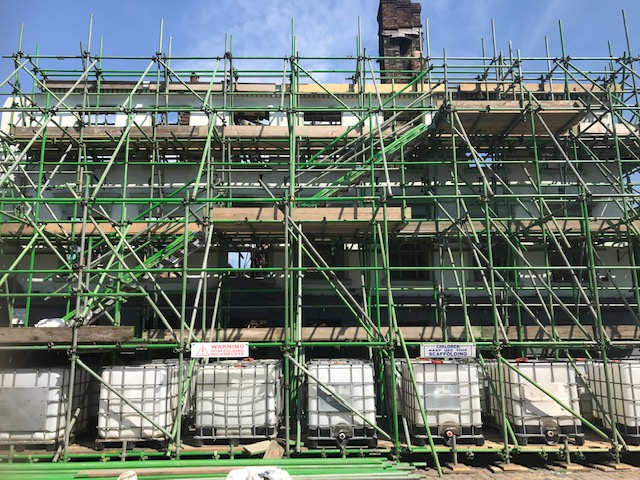
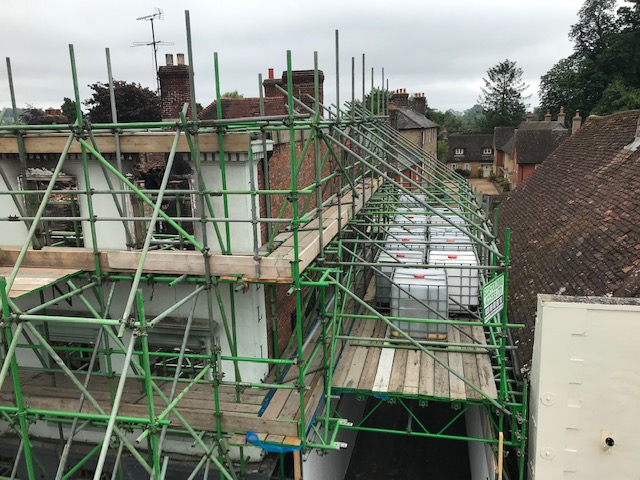
Working closely with structural engineers and scaffolding experts, a customised scaffolding system was designed to support the façade horizontally and vertically. This structure was incrementally weighted (kentledged) as work progressed to ensure stability. The team used clamps through existing windows to further secure the façade.
3. Controlled Demolition:
Once the façade was stabilised, high-risk elements were removed by hand using a mobile crane and safety basket, minimising the risk of an uncontrolled collapse. Debris was managed and kept on-site to maintain control over the workspace and materials.
4. Road Reopening and Traffic Management:
After stabilising the structure and securing the façade, we worked with the local highways department to establish protective hoardings, signage, and traffic management. This allowed for the safe reopening of North Road in compliance with the Highways Act.
Project Outcome
All listed structural elements were successfully preserved, meeting the standards of the conservation and listings officers. Through careful planning, collaboration, and innovative engineering, the Angel Inn and surrounding buildings’ historical facades were saved, ensuring the architectural heritage of Midhurst was upheld.