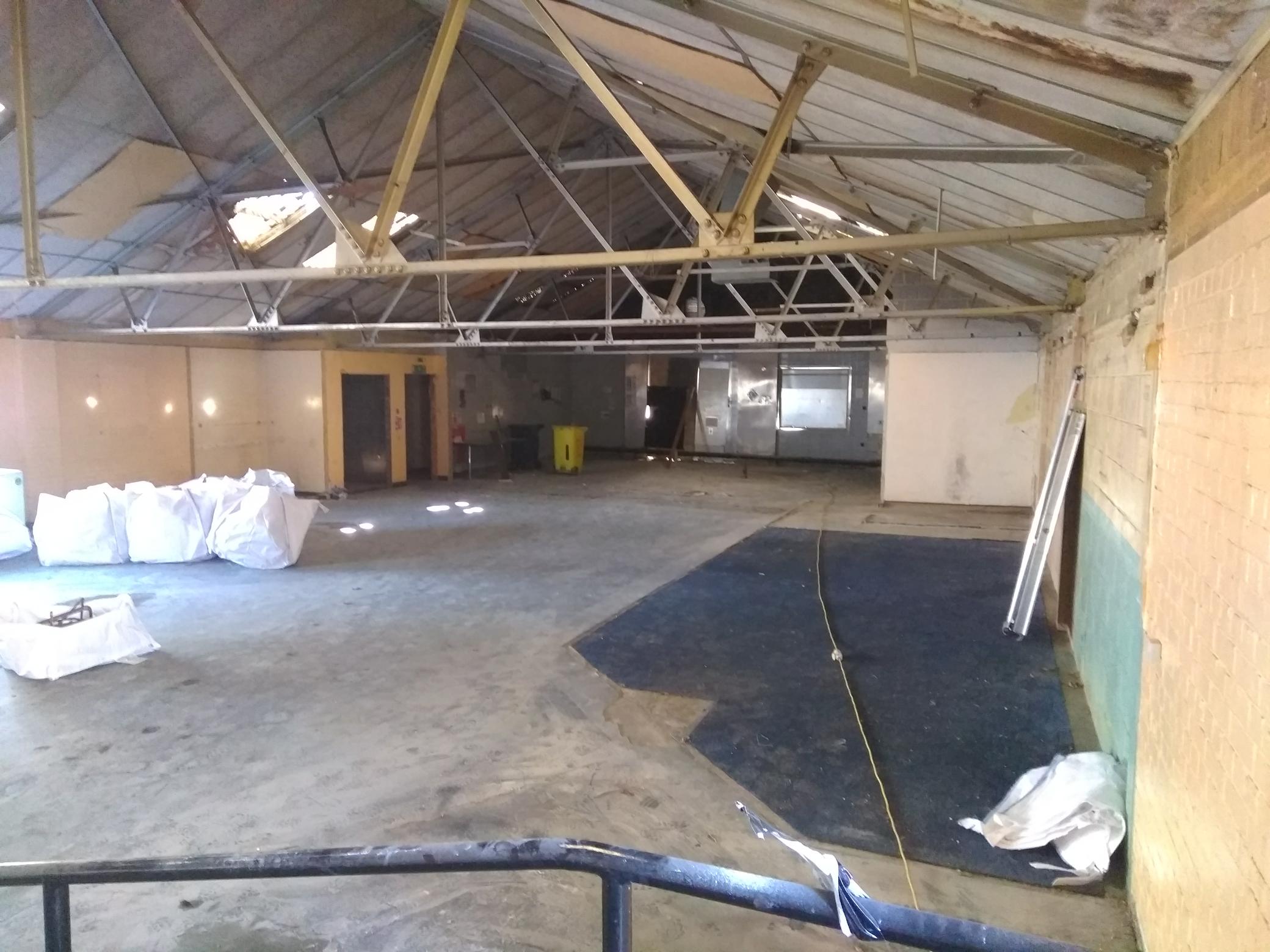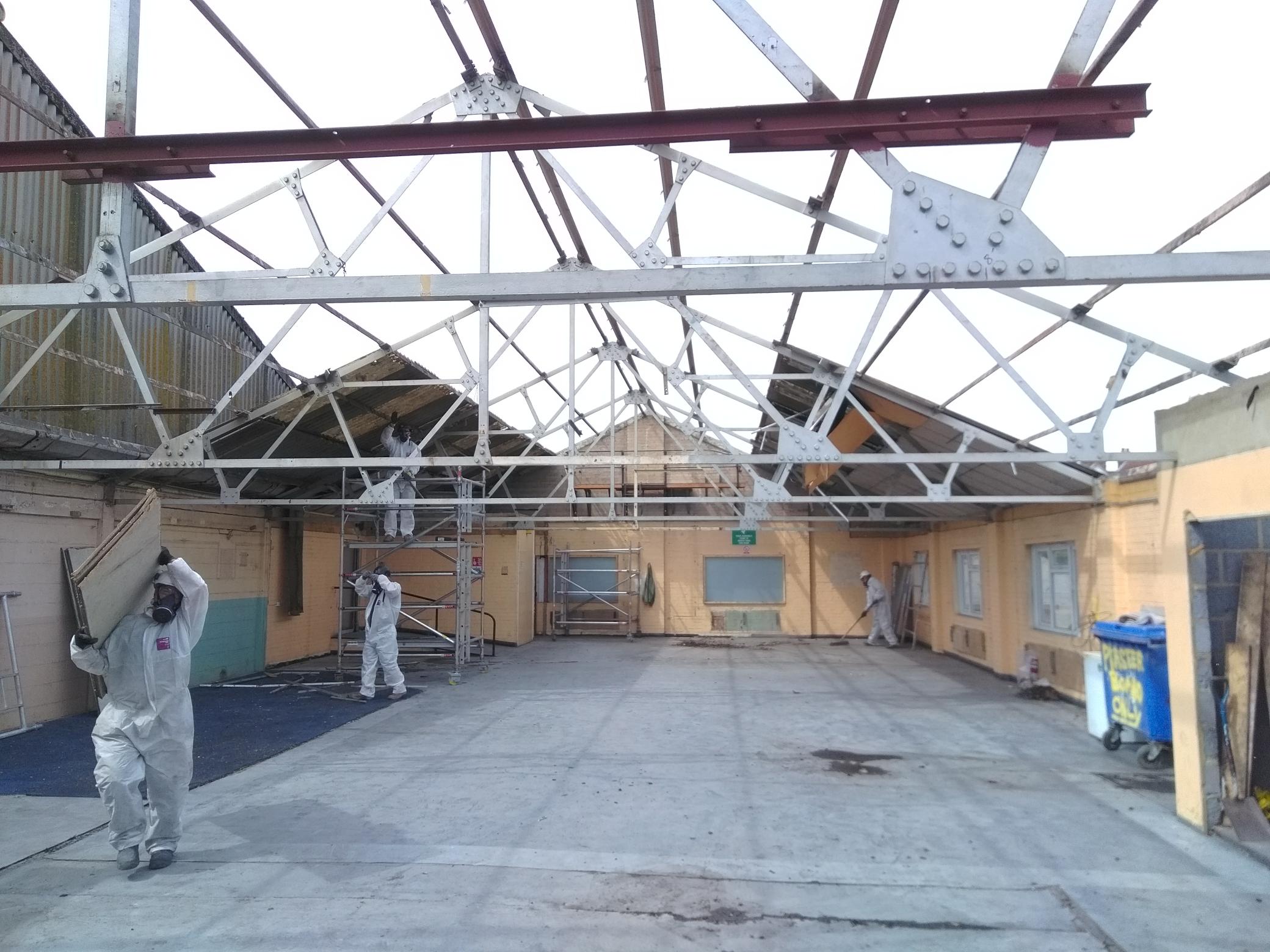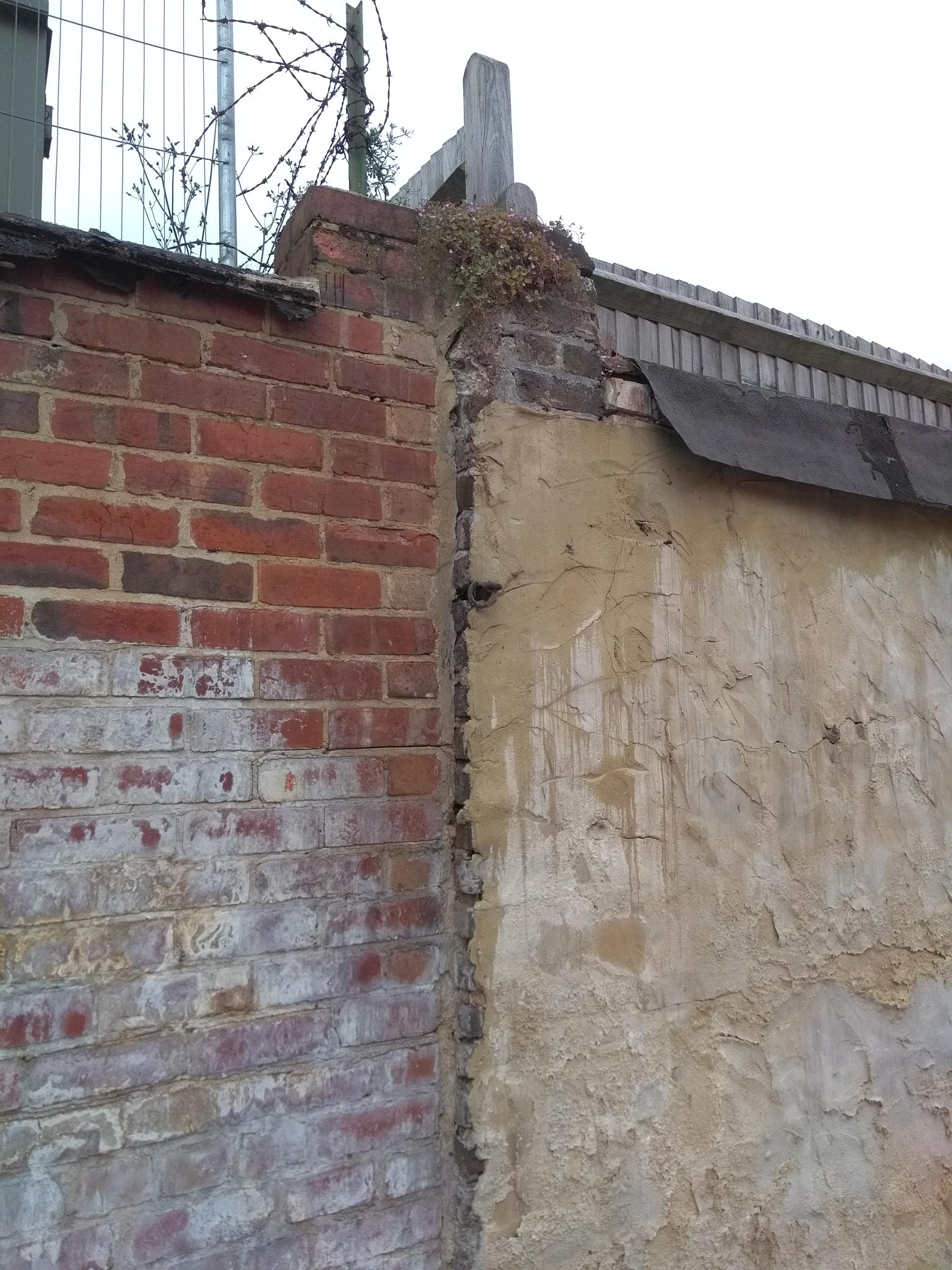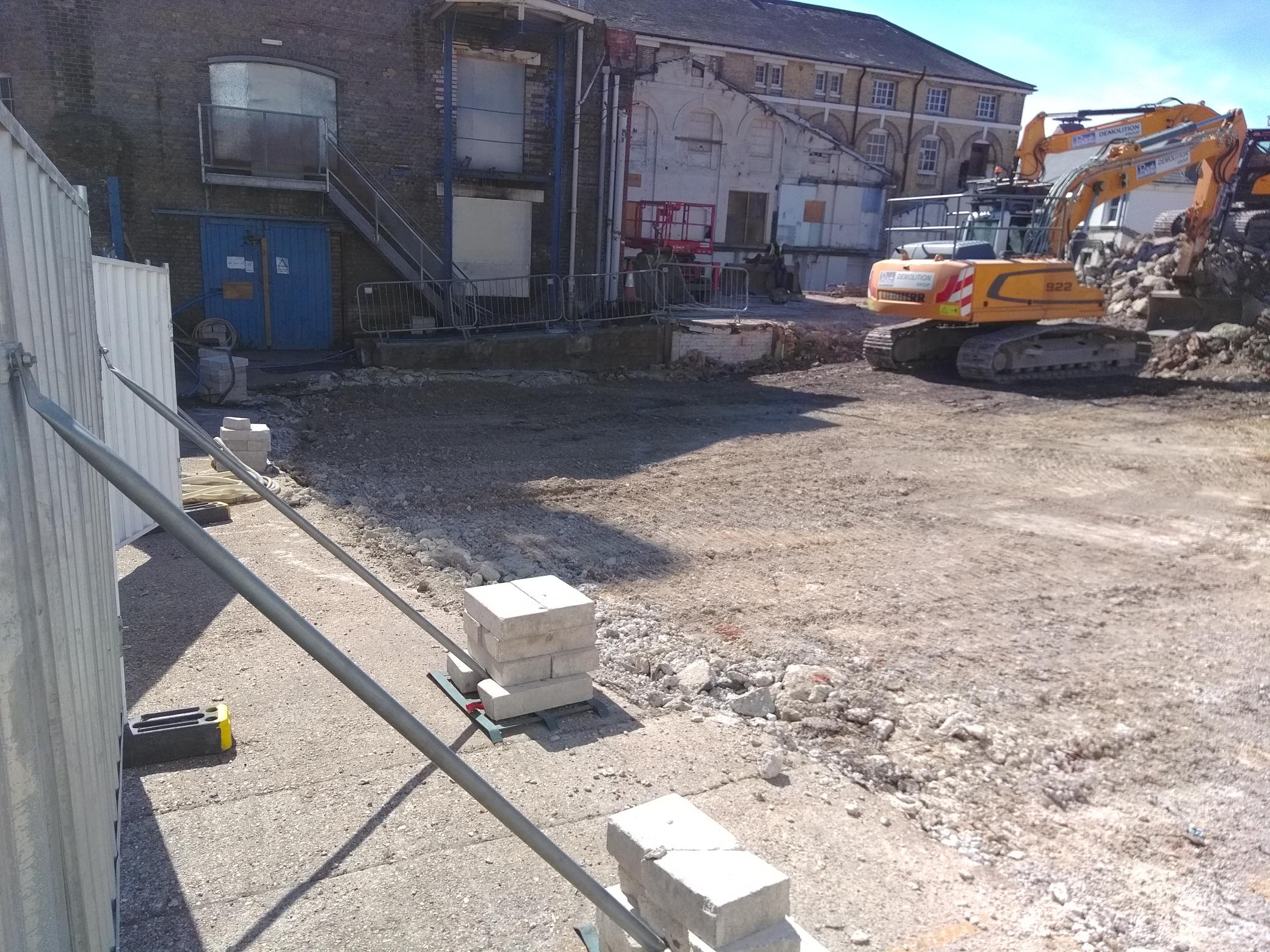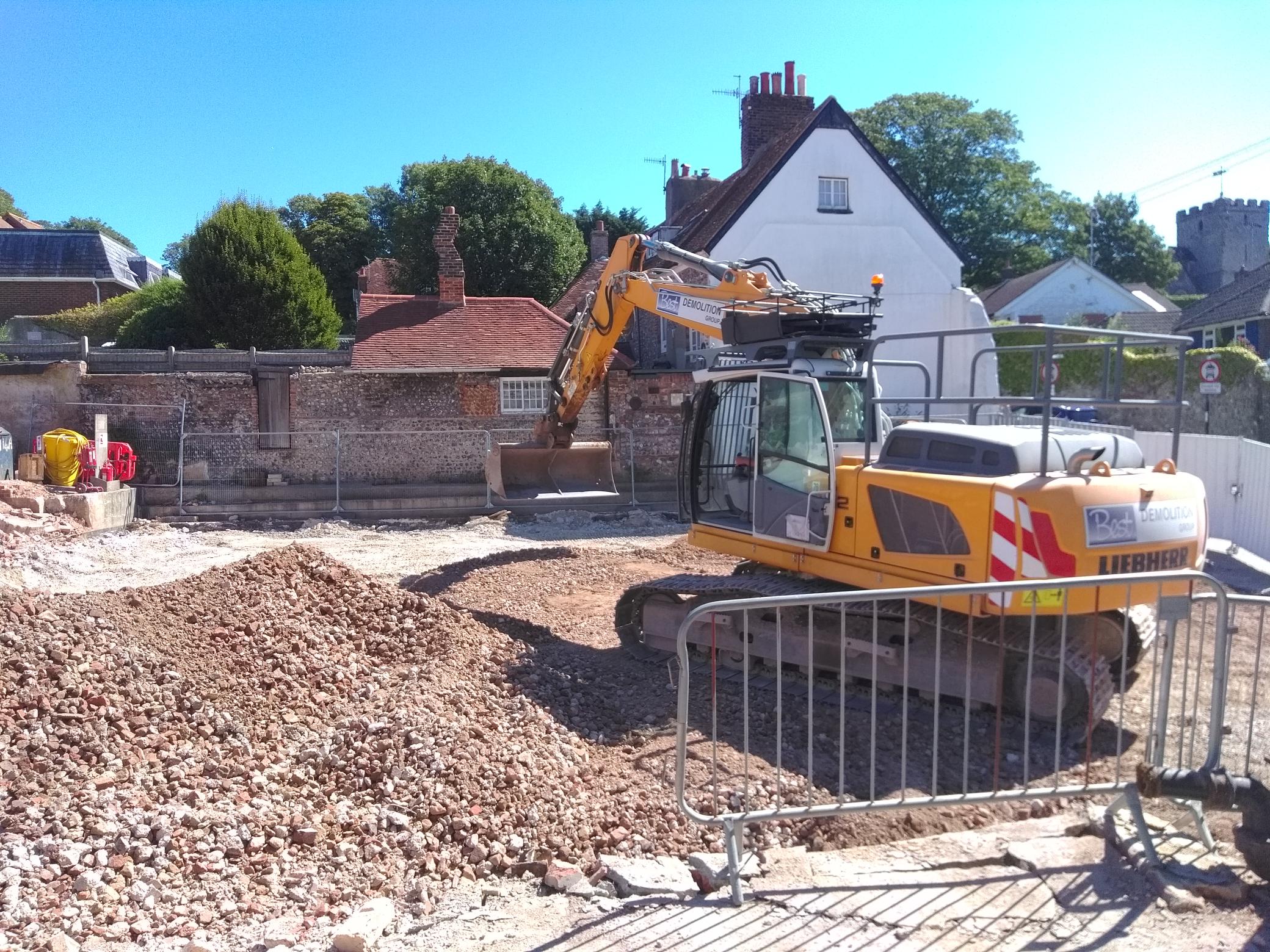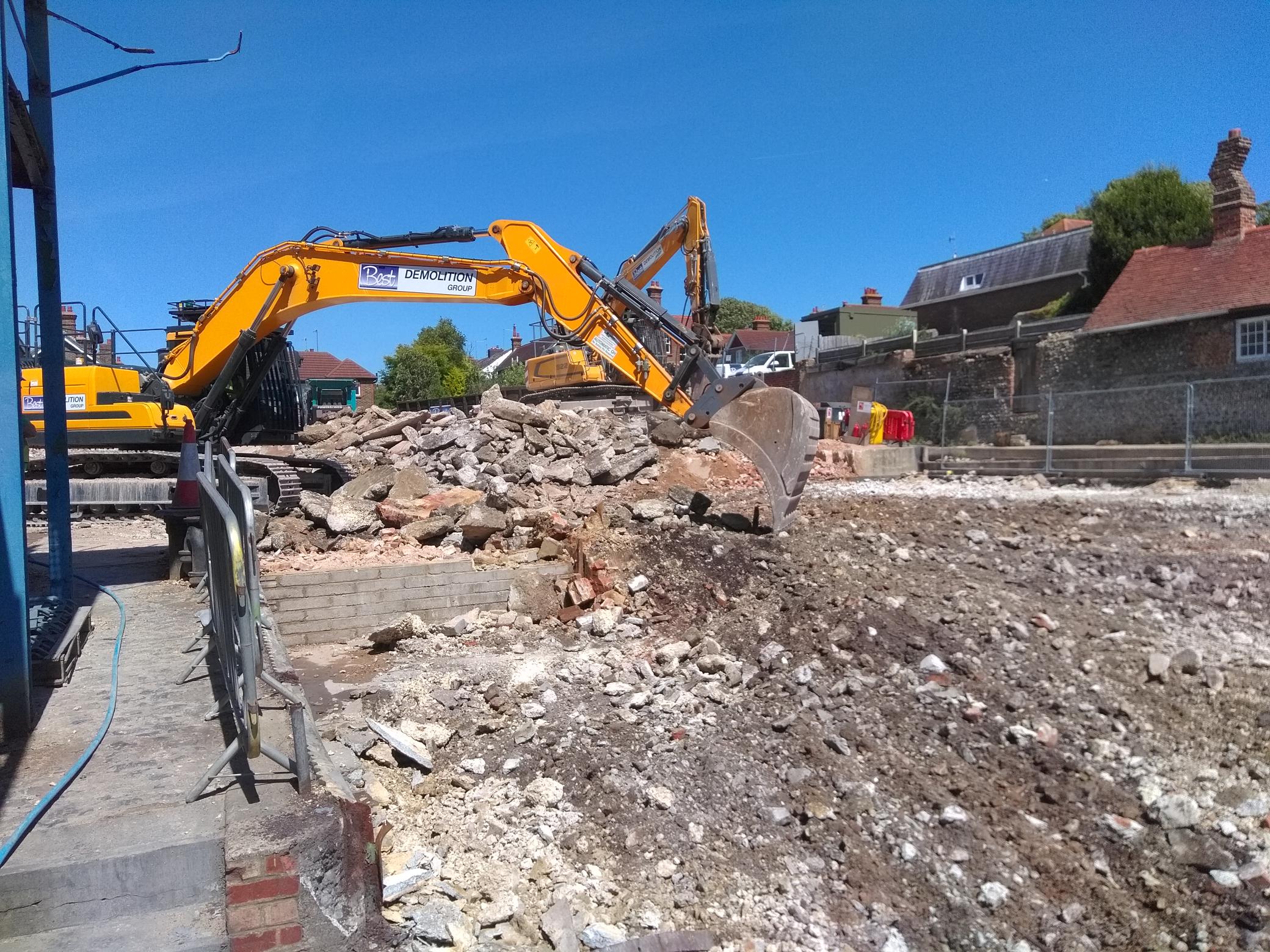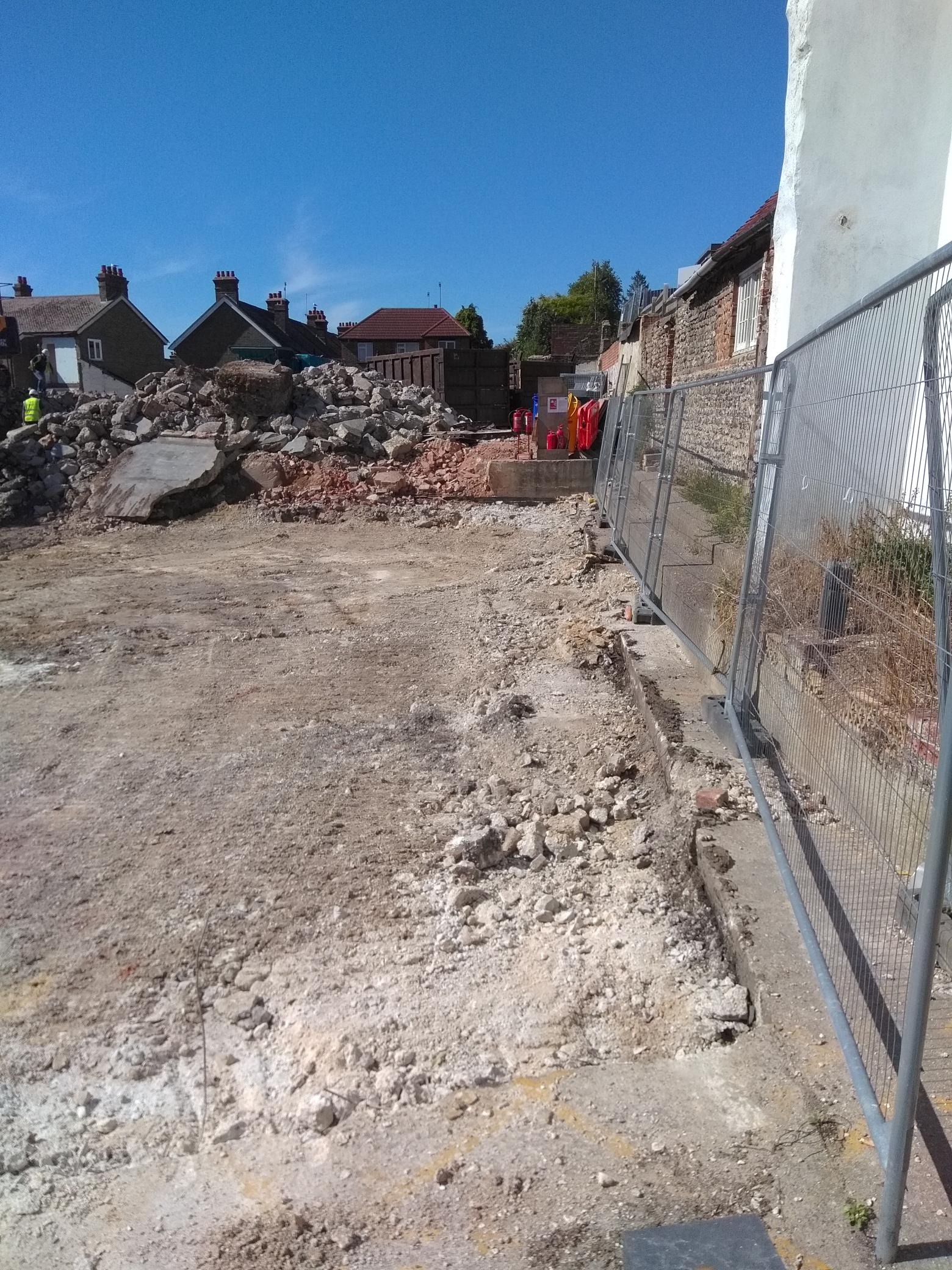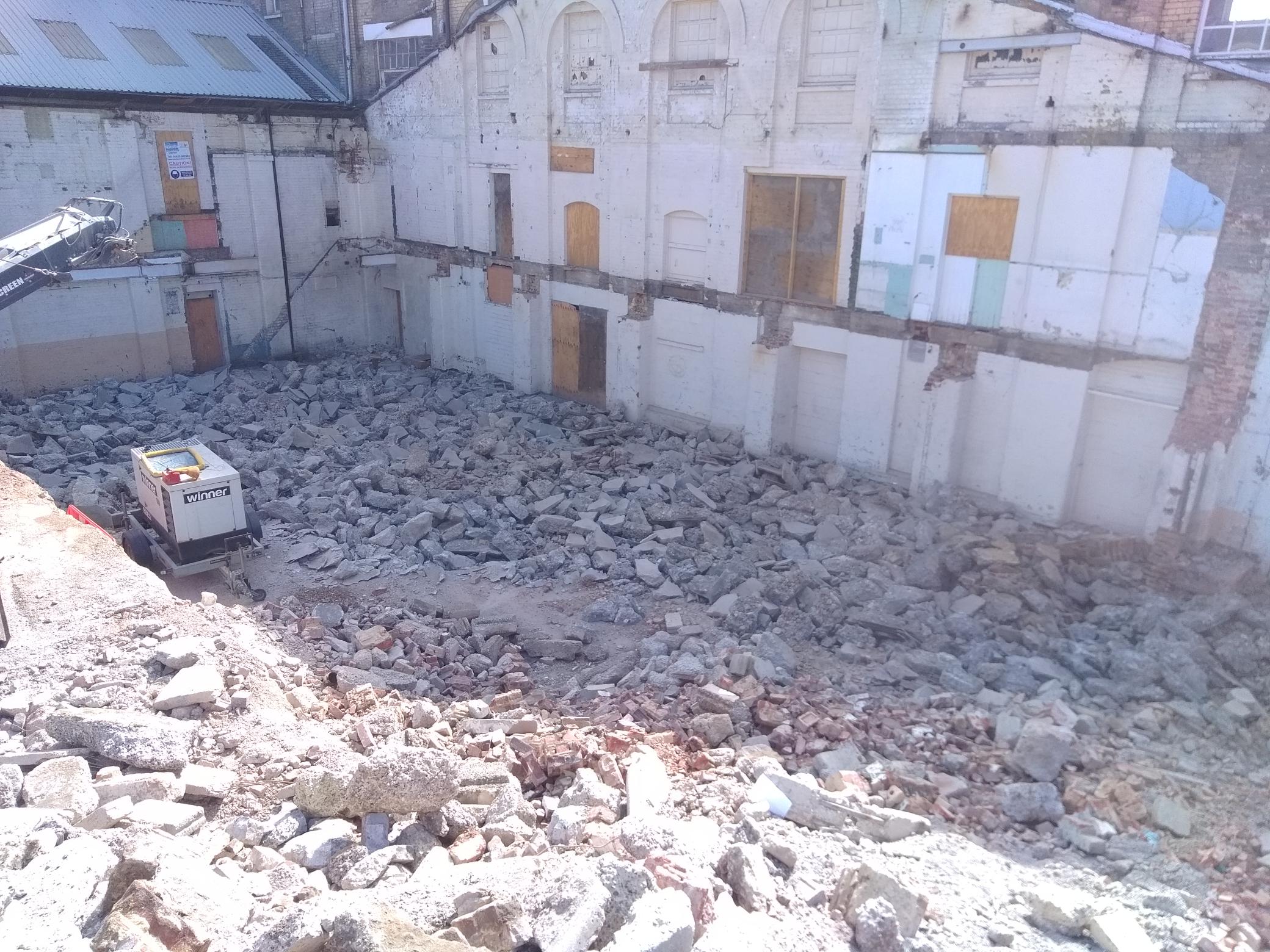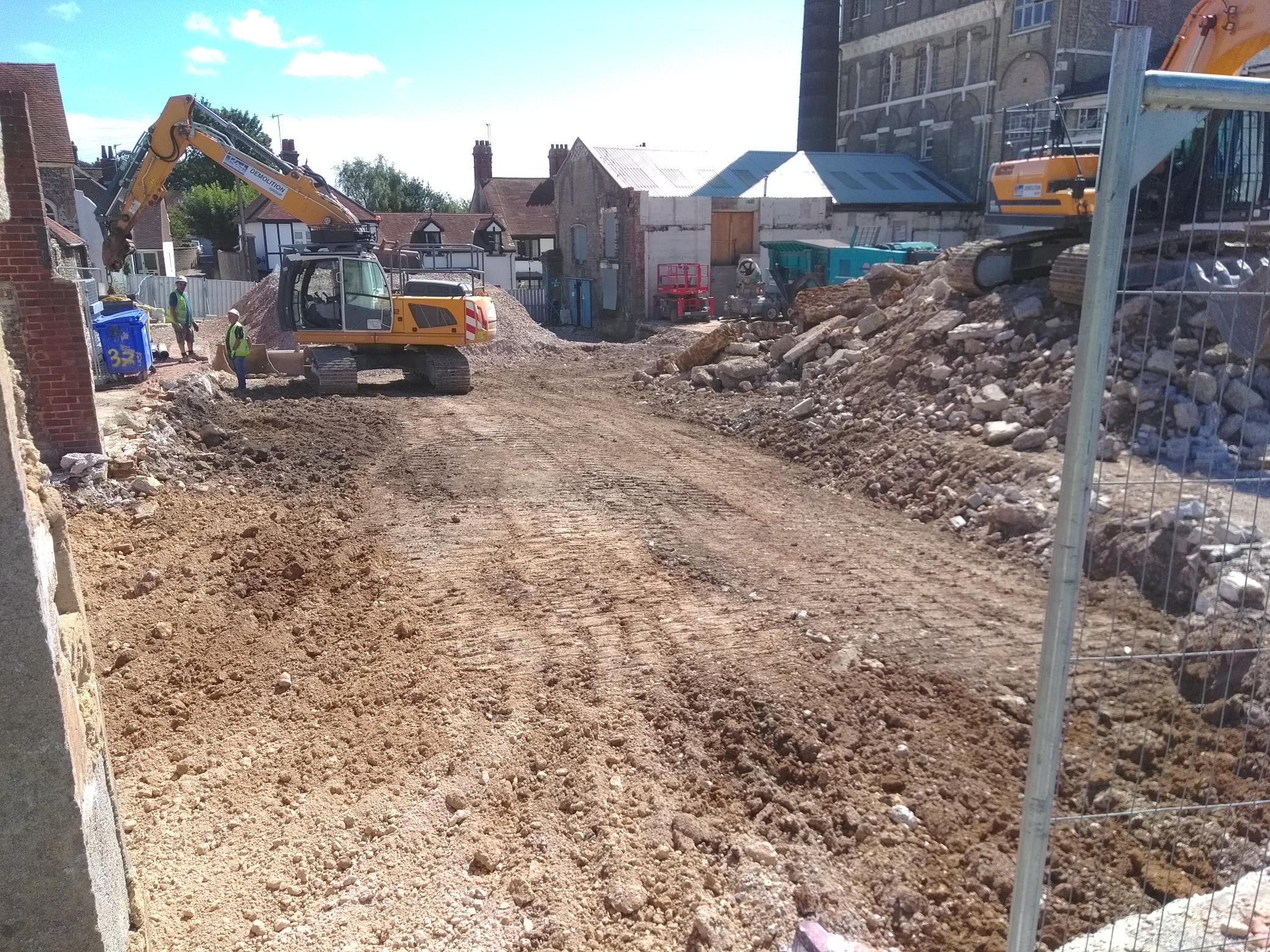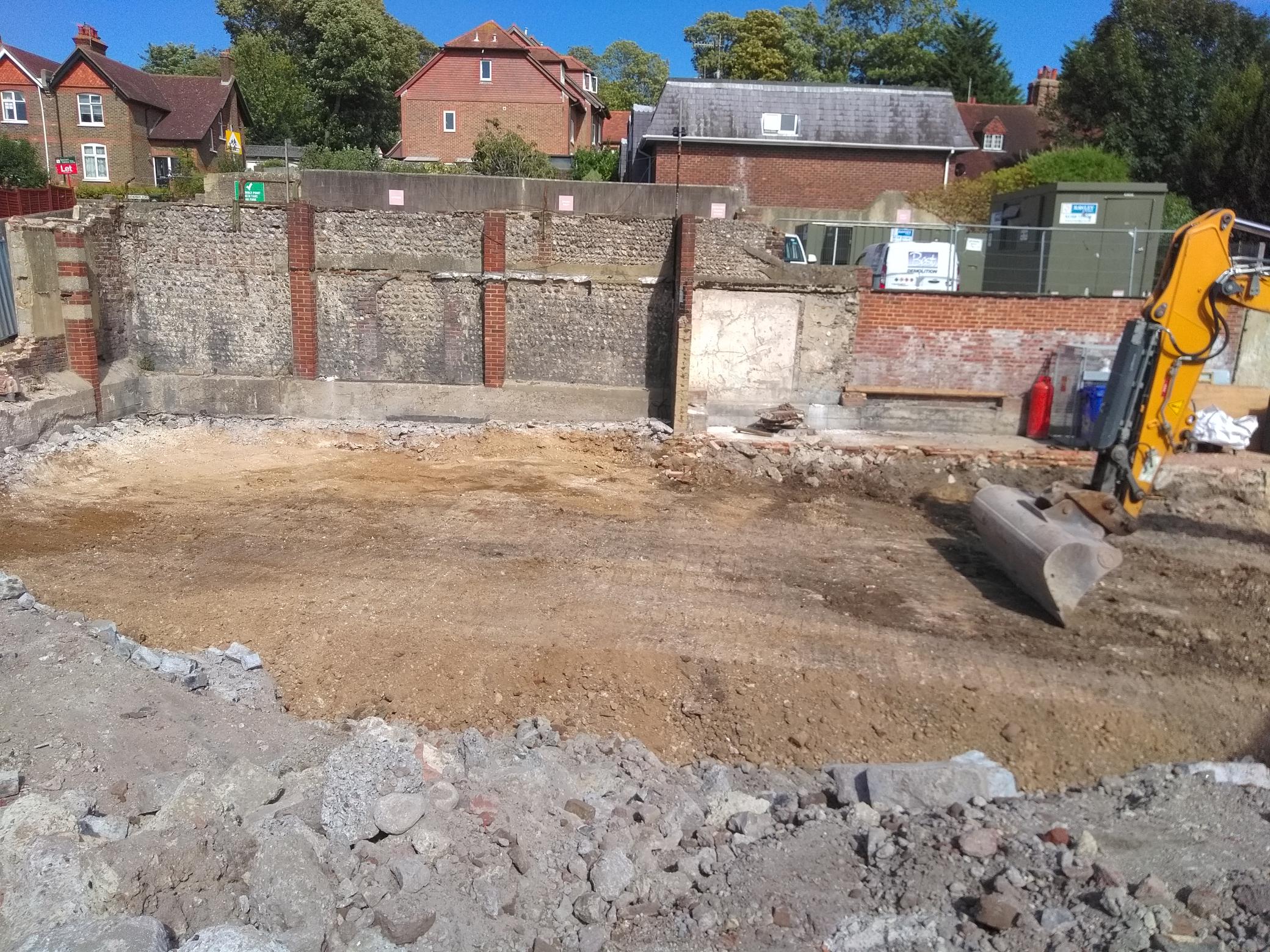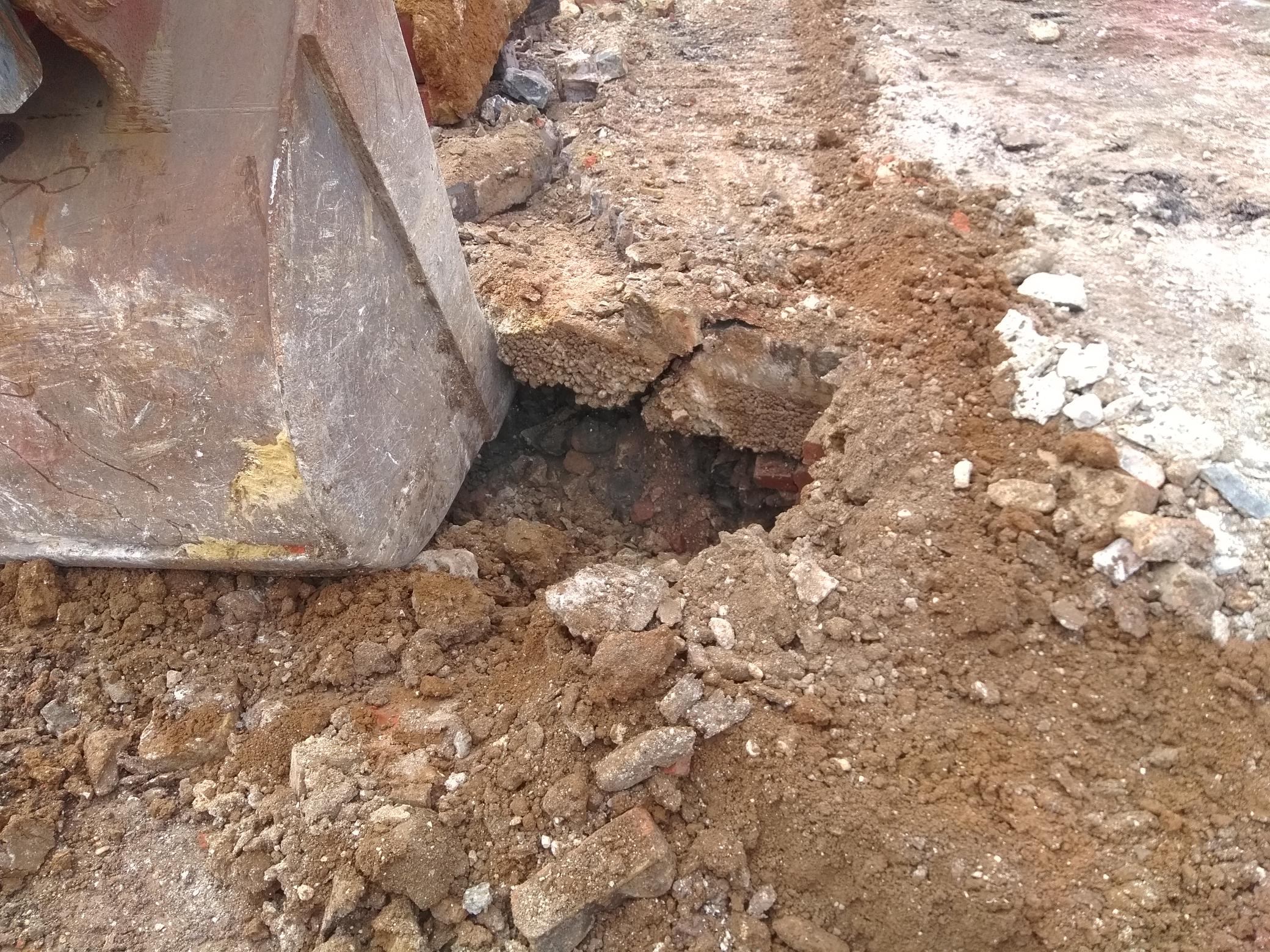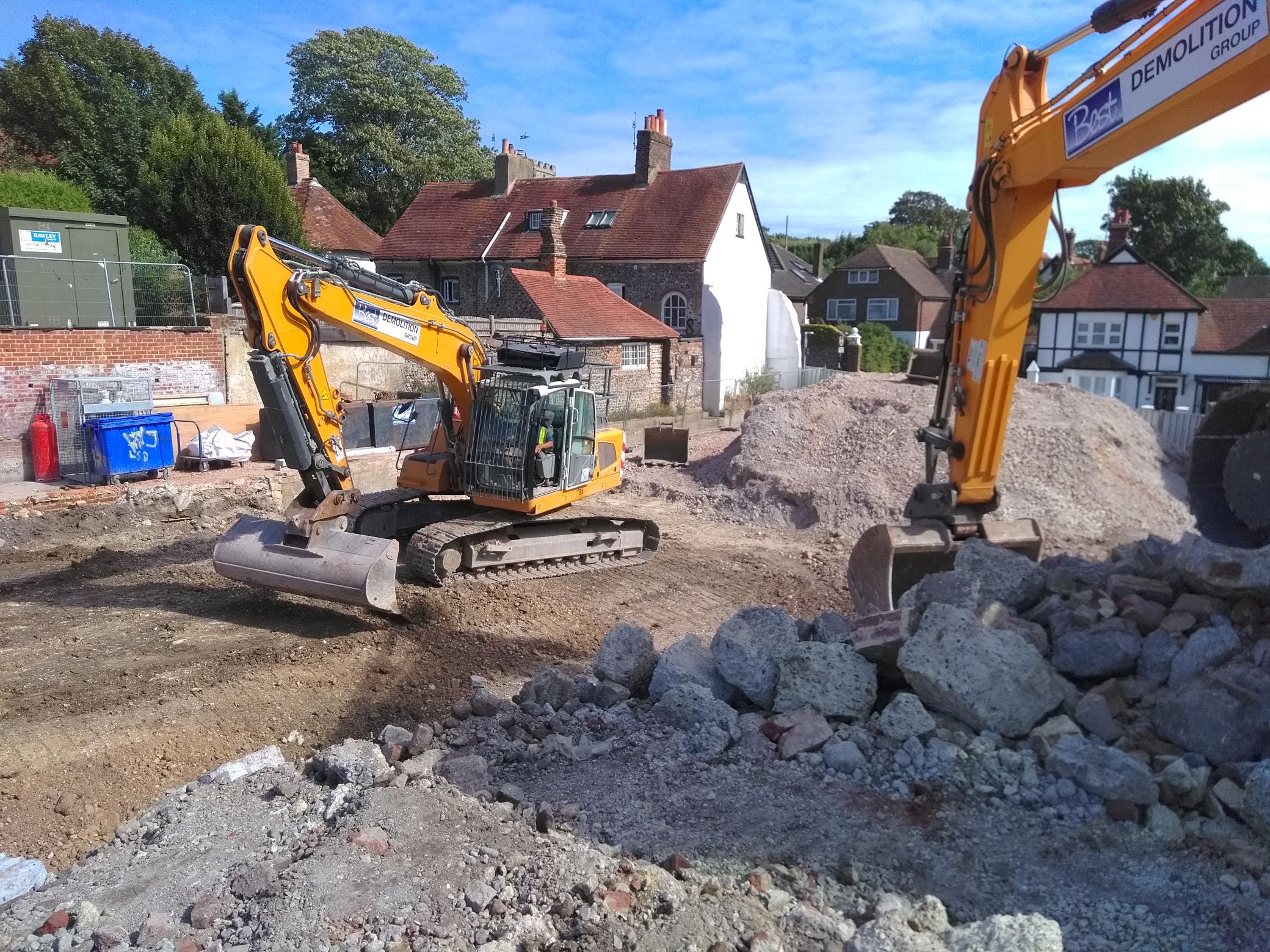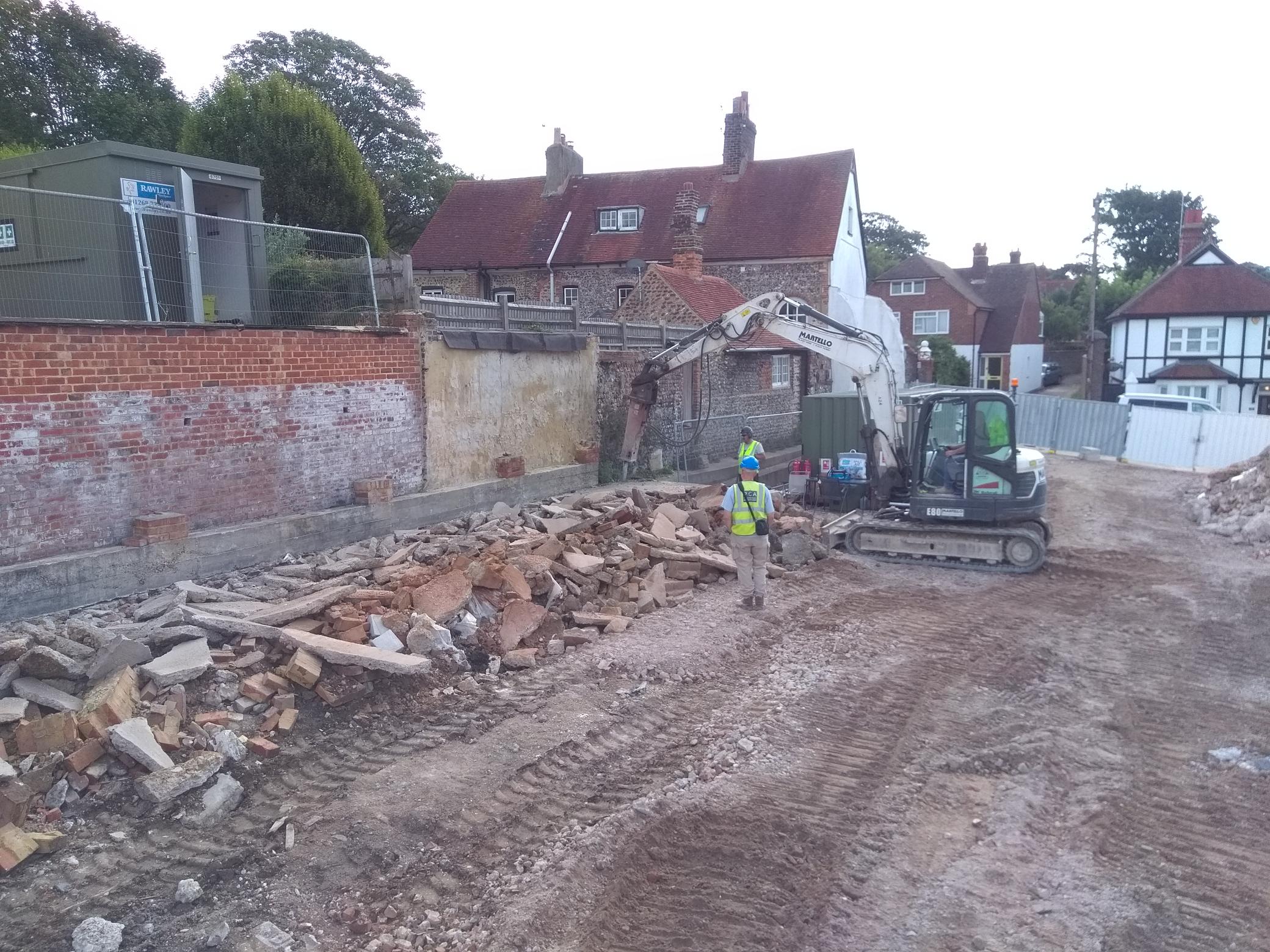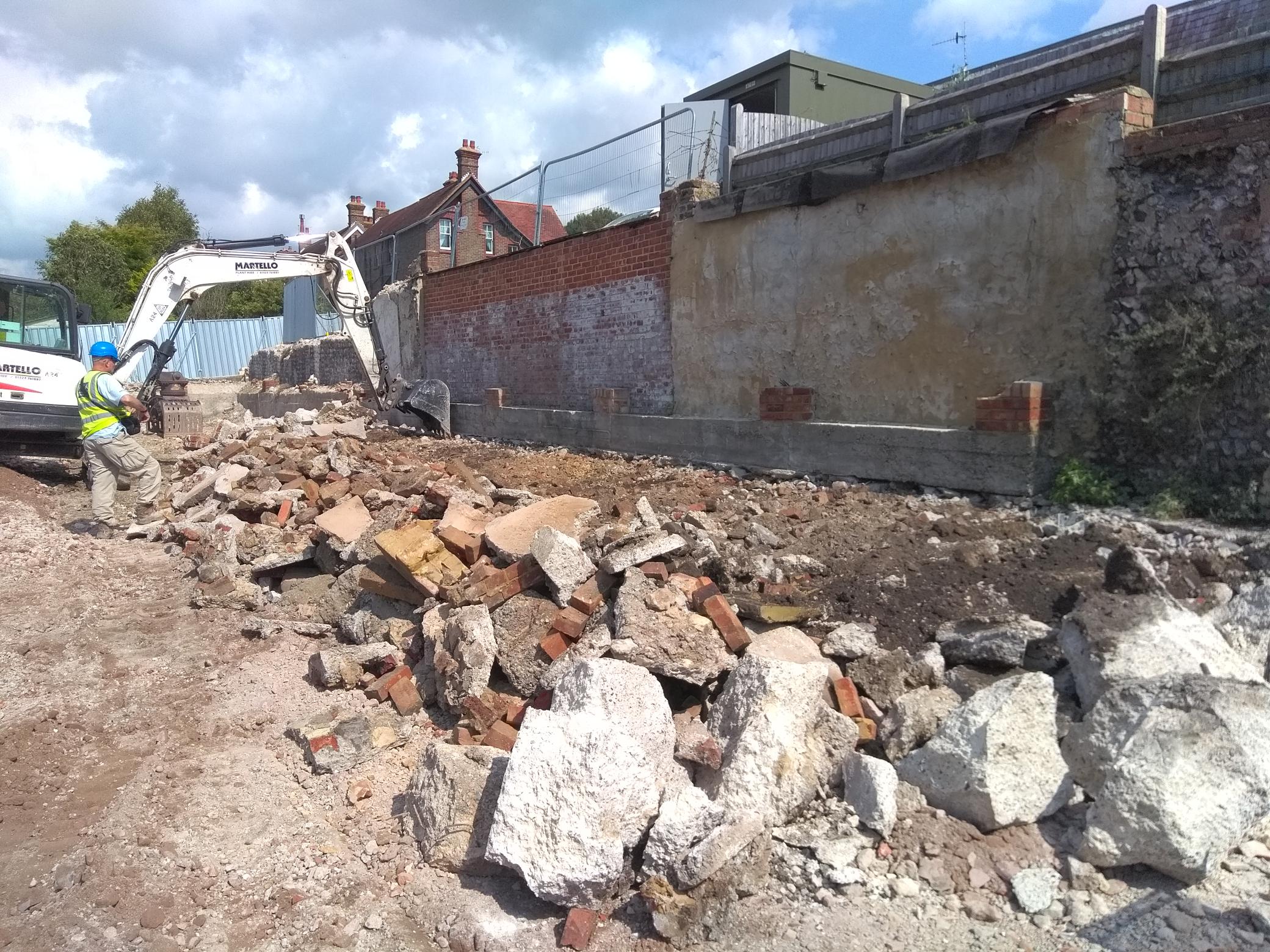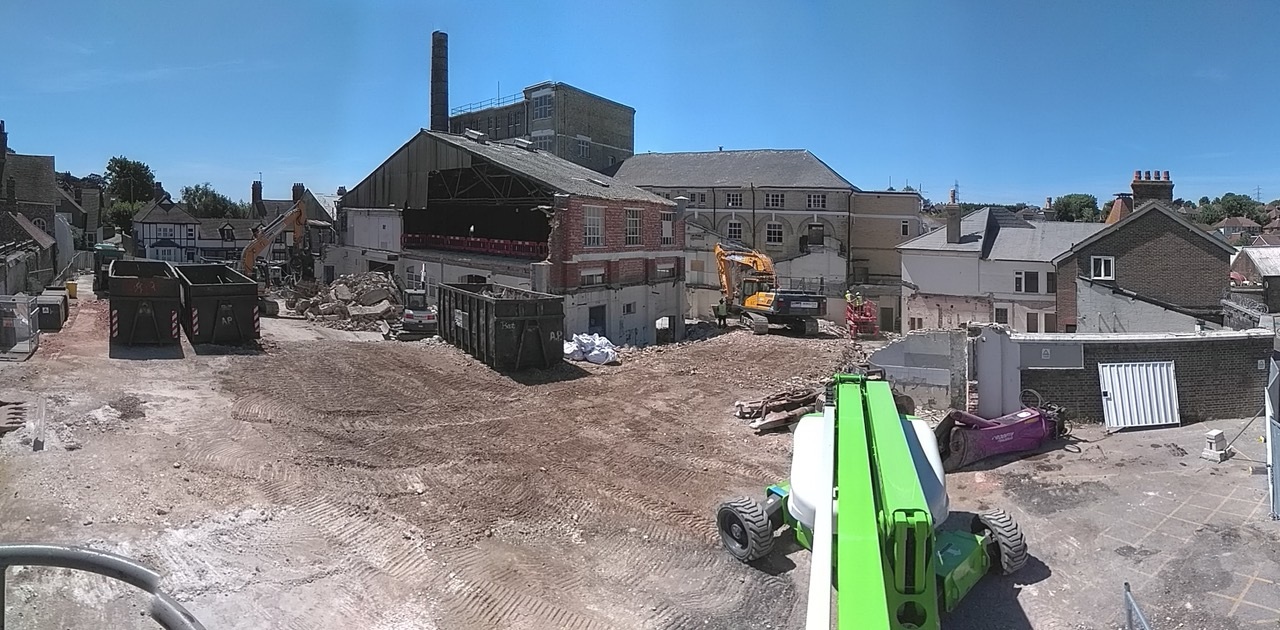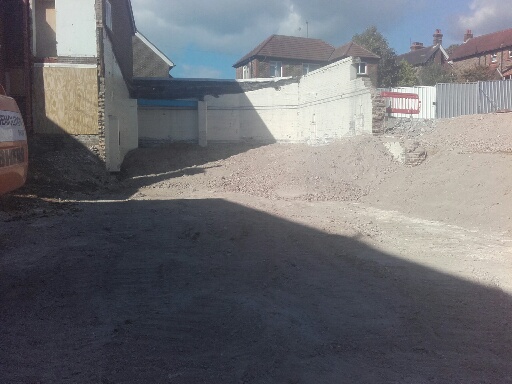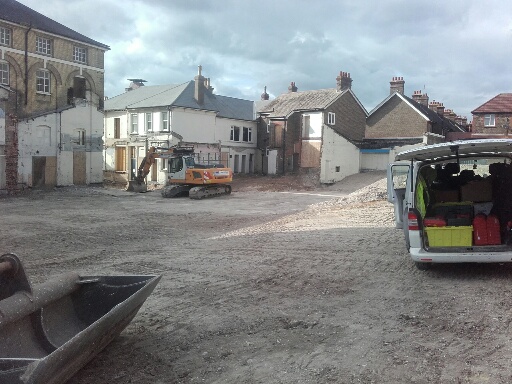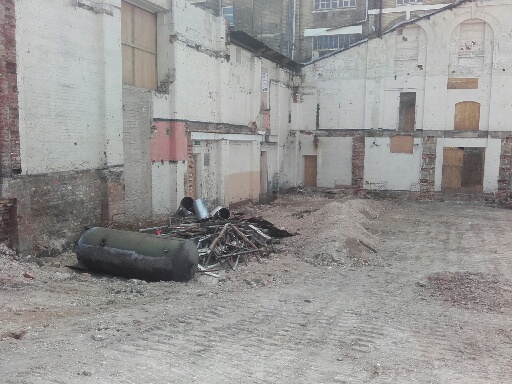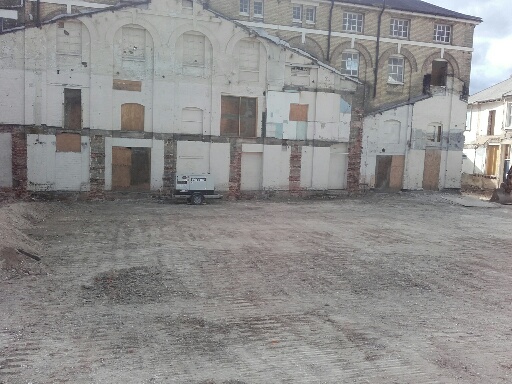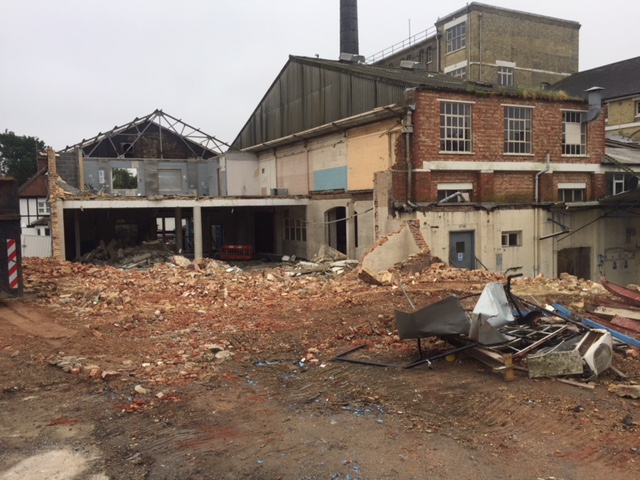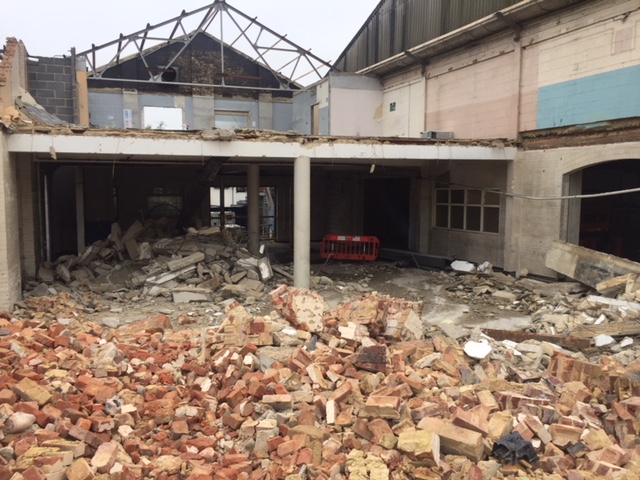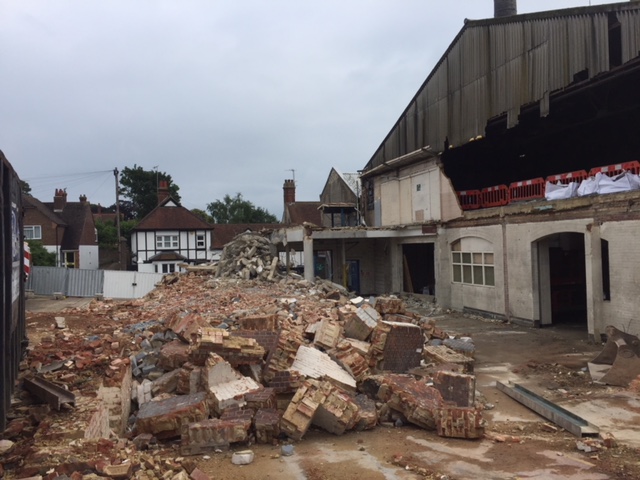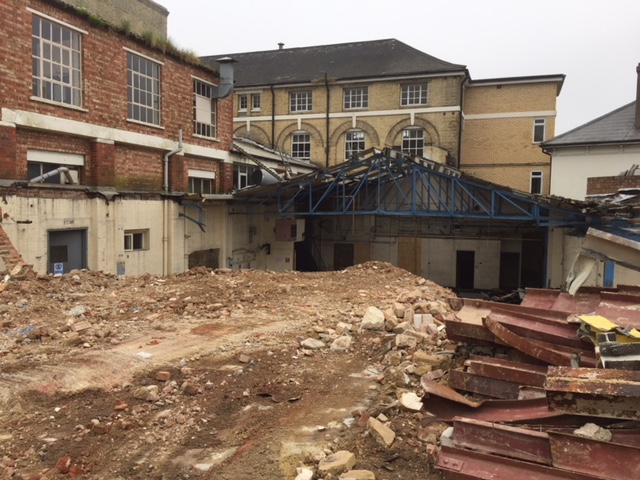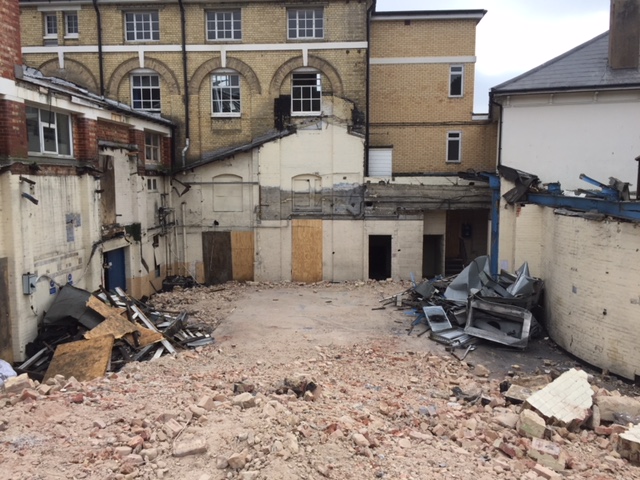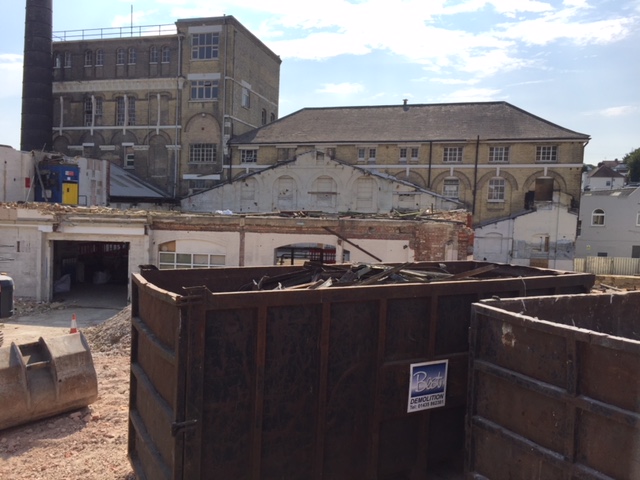

The redevelopment of the Portslade Brewery site involved the repurposing of the original brewery building alongside the construction of new residential housing. The project required the careful demolition of multiple extensions and ancillary structures that had been added to the site over several decades and were incompatible with the proposed redevelopment. These structures were removed down to ground slab level, including the removal of ground-bearing slabs and foundations, to enable a comprehensive redesign while preserving the architectural character of the historic brewery.
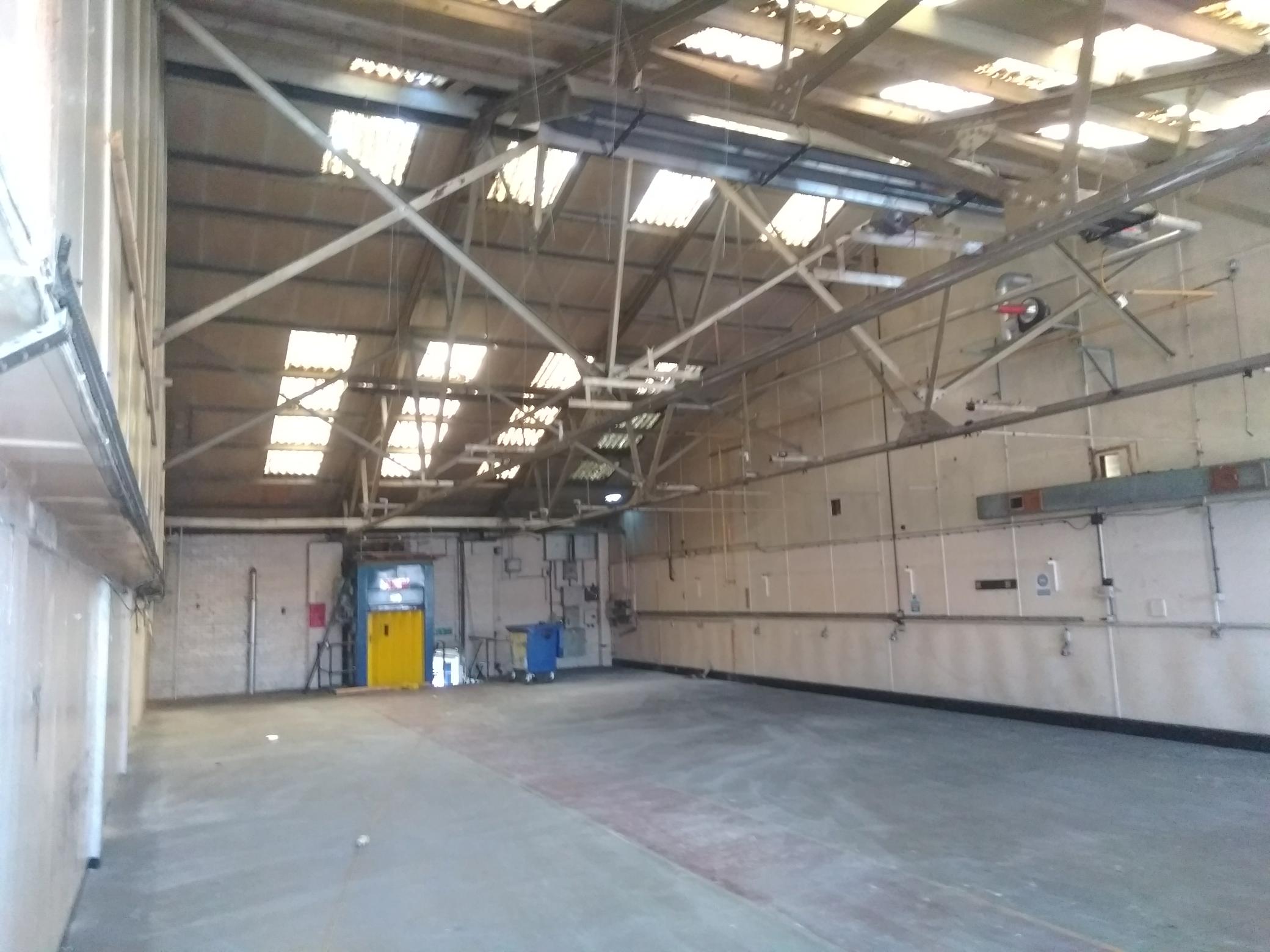
The primary brewery building was a five-storey Victorian industrial structure constructed from robust brick, concrete, and steel, featuring thick masonry walls, concrete floor slabs, and riveted steel beams. Surrounding it were extensions of varying construction types, including concrete stair shafts, brick-and-concrete additions, and steel-framed outbuildings. The diversity of materials and construction methods presented significant demolition challenges, requiring detailed planning, temporary structural support, and specialist scaffolding systems secured with kentledge to maintain stability throughout the works.
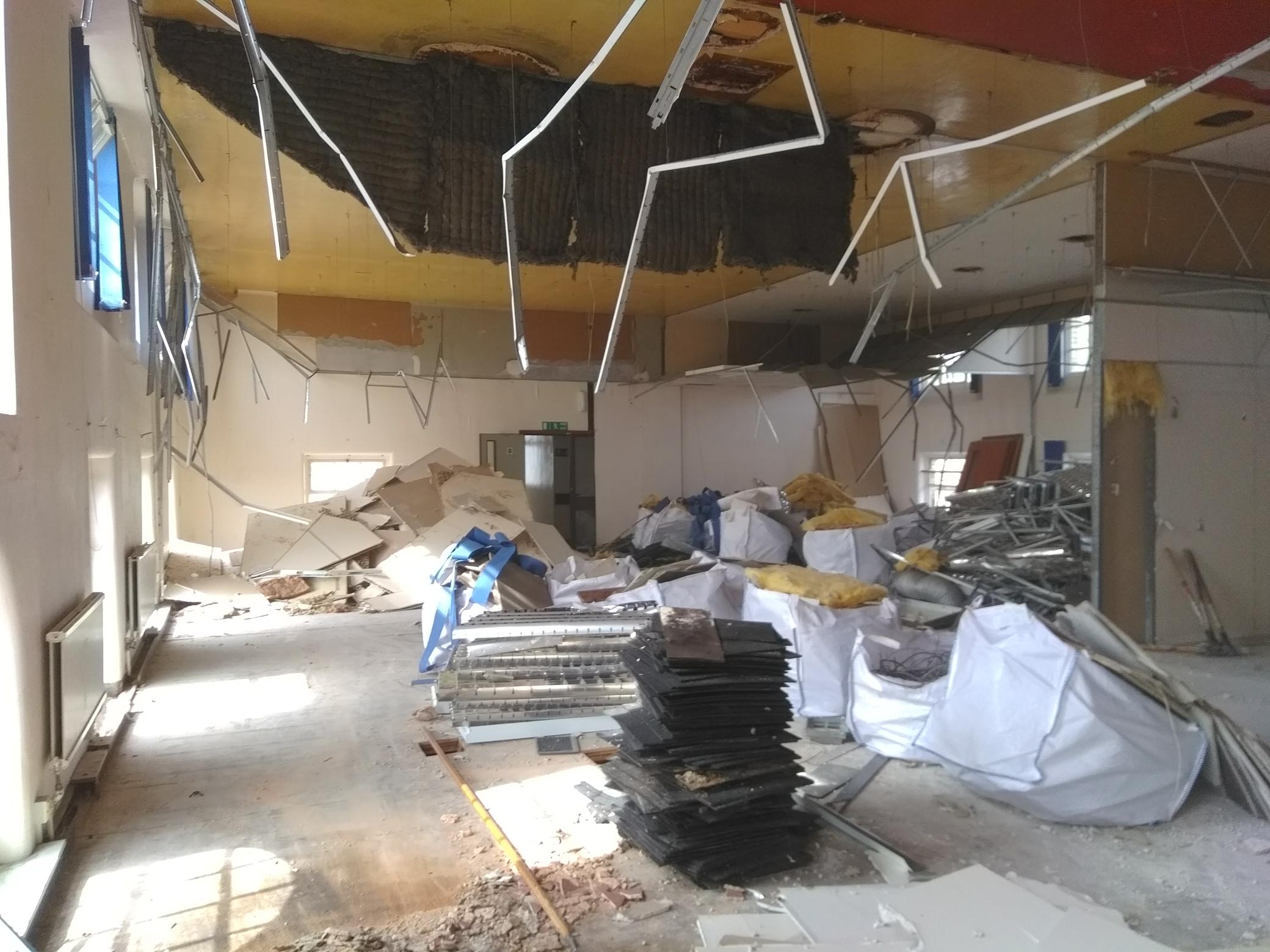
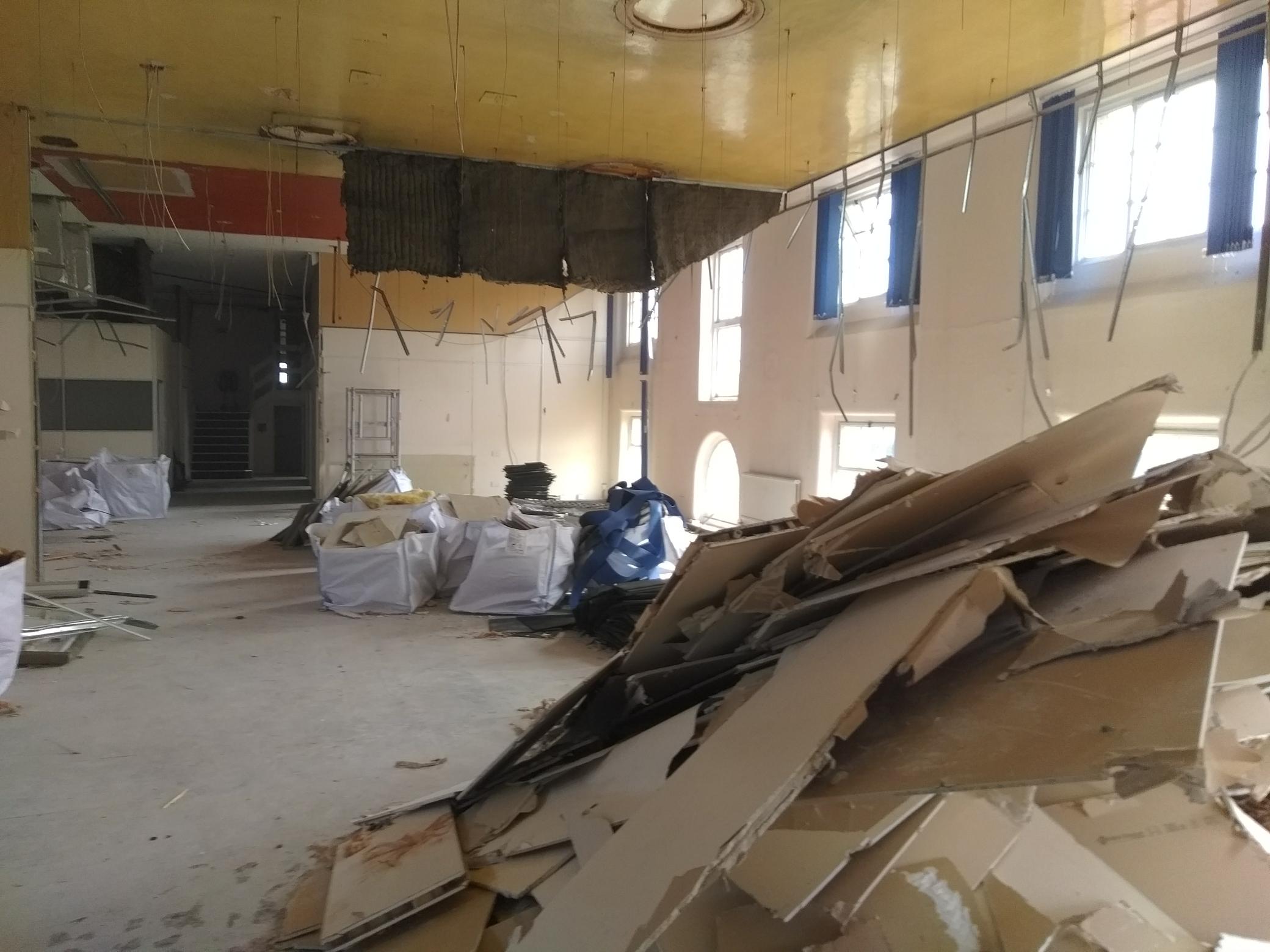
Demolition was carried out through a combination of manual separation techniques and high-reach mechanical equipment. Structures were carefully disconnected from the main building using saw-cutting and hand tools before being dismantled in stages. Internally, a soft-strip process removed all non-structural elements, while back-propping supported existing slabs. Robotic demolition equipment was used where precision was required to protect the retained structure and ensure compatibility with future construction.
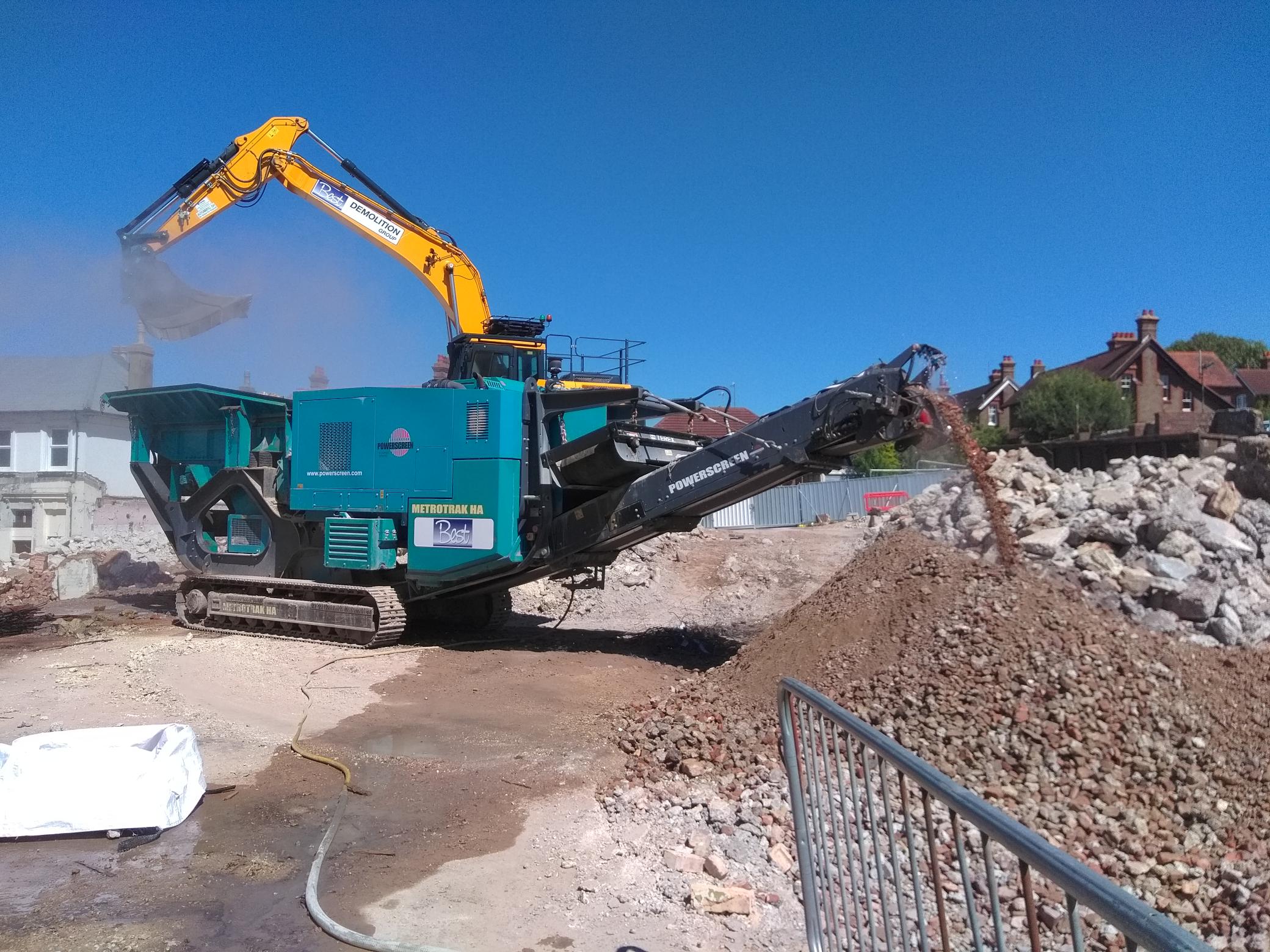
Sustainability was a key consideration throughout the project. Demolition materials were segregated on-site, with concrete and hardcore crushed and reused within the new development, reducing waste and minimising environmental impact.
Overall, the Portslade Brewery redevelopment represented a complex demolition and refurbishment project that required innovative engineering solutions, careful structural management, and sustainable practices to successfully integrate historic preservation with modern residential development.